

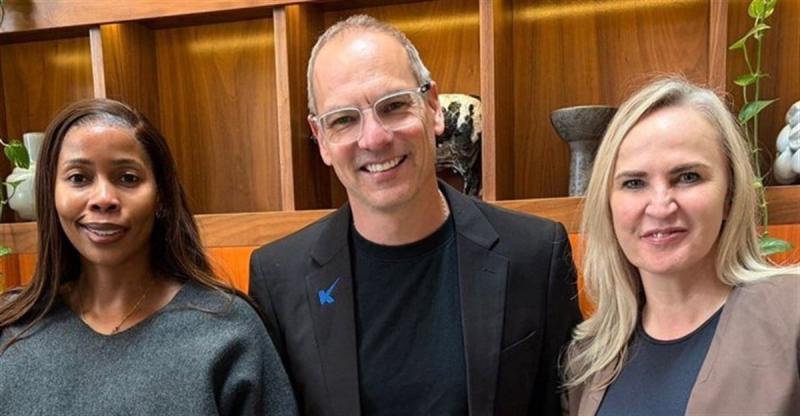
Grindstone Ventures Launches $31.2 Million Fund to Back African Tech Startups
South African venture capital firm Grindstone Ventures has launched a R500 million (about US$31.2 million) fund aimed at backing high-growth, technology-enabled businesses across Africa, with a particular focus on startups moving from Seed to Series A.
The new fund, launched in partnership with Knife Capital and Thinkroom, is designed to address one of the most persistent challenges facing African startups: the difficult transition between proving that a business model works and securing the larger institutional capital required to scale.
The fund is targeting an initial close of R150 million, approximately US$9.3 million, and plans to invest in between 15 and 20 companies. While South Africa will remain its primary investment market, Grindstone Ventures says it will selectively consider opportunities in other African countries.
The fund’s investment strategy is built around what Grindstone Ventures describes as Africa’s “missing middle” — startups that have already demonstrated commercial traction but are still too early or too small to attract significant institutional investment.
“Some of Africa’s most promising businesses are getting caught in the space between proving that something works and having the scale required to attract larger pools of institutional capital,” said Thandiwe Maqetuka, managing partner of Grindstone Ventures.
According to Maqetuka, the objective is not simply to inject more money into the startup ecosystem but to identify promising businesses at a stage when capital remains scarce, take meaningful minority positions and work closely with founders to help them reach institutional scale.
The firm plans to support portfolio companies beyond financing, providing assistance with strategy, governance, commercial growth, market access, capital strategy and preparation for eventual exits.
For many African startups, raising an initial seed round is only the beginning of the funding journey.
The next major challenge is often securing a Series A round large enough to finance hiring, technology development, market expansion and regional growth. Startups that cannot demonstrate sufficient growth quickly can find themselves caught between early-stage investors who consider them too advanced and larger institutional investors who consider them too small.
That financing gap has become particularly important as investors have become more selective following the global venture capital slowdown of recent years.
However, the African technology investment market is showing signs of recovery.
According to Partech Africa’s 2025 Africa Tech Venture Capital Report, African technology startups raised US$4.1 billion in combined equity and debt financing in 2025, representing a 25% increase from the previous year. Equity funding reached US$2.4 billion across 462 deals, while debt financing rose sharply to US$1.6 billion.
Despite the recovery, access to capital remains uneven. Partech reported that Kenya, South Africa, Egypt and Nigeria accounted for 72% of total African technology funding in 2025, highlighting the continued concentration of venture capital around the continent’s largest startup ecosystems.
The new Grindstone fund comes at a significant moment for South Africa’s startup ecosystem.
Partech’s data shows that South Africa reclaimed leadership in African equity funding in 2025, leading the continent in both equity funding and equity deal activity for the first time since 2017. The country recorded about US$715 million in total funding, including equity and debt, in 2025.
Grindstone’s decision to focus primarily on South African companies therefore reflects the country’s growing position as a major technology investment hub while still giving the fund flexibility to pursue opportunities elsewhere on the continent.
The new fund follows the firm’s first investment vehicle, Grindstone Ventures Fund I, which invested in seven portfolio companies.
Those companies included Locstat, Welo and AgriLogiQ, with several portfolio businesses subsequently securing additional equity investment from international investors. Grindstone Ventures is also working towards an exit from one of its investments that it says will return meaningful capital to investors.
That experience appears to have shaped the firm’s approach to its second fund.
Rather than spreading capital evenly across every investment, Grindstone plans to identify promising companies early, allow their performance to develop and then concentrate additional capital behind the strongest performers.
The strategy puts a particular emphasis on exits and realised returns rather than relying solely on rising private-company valuations.
As Maqetuka has put it, “Paper valuations don’t return capital to investors, exits do.”
The partnership brings together different parts of South Africa’s entrepreneurship and investment ecosystem.
Knife Capital has experience investing in and scaling technology businesses, while Thinkroom has focused on entrepreneurship development and acceleration. Grindstone’s broader platform is also co-owned by Knife Capital and Thinkroom.
The combination means the new fund is positioned to offer founders more than conventional venture financing.
For startups, support could include improving corporate governance, developing commercial strategies, gaining market access, preparing for subsequent fundraising rounds and positioning the business for an eventual acquisition or other liquidity event.
The fund also comes with an explicit inclusion objective.
Grindstone Ventures says it wants at least 50% of its portfolio companies to be black-owned, while also pursuing gender-balanced representation among female founders and women in leadership positions.
Maqetuka said the fund does not view financial returns and greater inclusion as competing objectives.
Get instant alerts and updates based on your interests. Be the first to know when big stories happen.
The strategy reflects the wider challenge of unequal access to venture capital across Africa, where funding has historically been concentrated among a relatively small number of markets, founders and sectors.
Partech’s 2025 data showed that female-founded startups accounted for 19% of equity deals, up 8% year-on-year, but received only 10% of total equity funding.
More Than Just Another Venture Fund
The launch of Grindstone Ventures’ new fund is significant because it comes at a time when African startup funding is becoming more sophisticated but also more demanding.
The continent raised more capital in 2025 than in the previous year, but investors are increasingly looking for businesses with clear revenue models, strong governance, credible growth prospects and a realistic route to profitability or an exit.
The growth of debt financing is another sign of this changing environment. Partech reported that debt accounted for 41% of all African startup capital deployed in 2025, compared with 31% in 2024.
For founders, that means simply having a promising technology or large addressable market may no longer be enough.
They must demonstrate that their companies can convert early traction into sustainable growth.
That is precisely the space Grindstone Ventures is attempting to occupy.
Here is What the FUND Could Mean for African STARTUPS
If the fund reaches its full R500 million target and invests across 15 to 20 companies, it could become an important source of growth capital for startups that have already moved beyond the idea and experimentation stage.
The relatively concentrated portfolio also suggests that Grindstone intends to take a hands-on approach rather than operate as a passive financial investor.
For African founders, particularly those operating in South Africa, the opportunity could therefore extend beyond receiving a cheque. Access to experienced investors, strategic networks, governance expertise and follow-on funding can be just as important as the initial investment.
The bigger question will be whether more African venture firms follow the same path.
As international investors become more selective, locally rooted funds with knowledge of African markets could play an increasingly important role in keeping promising companies funded through the difficult stages of growth.
For Grindstone Ventures, the new R500 million vehicle represents a bet that the next generation of African technology companies will not only emerge from the continent’s startup ecosystem but will also be able to scale into globally competitive businesses with strong and measurable returns for investors.