
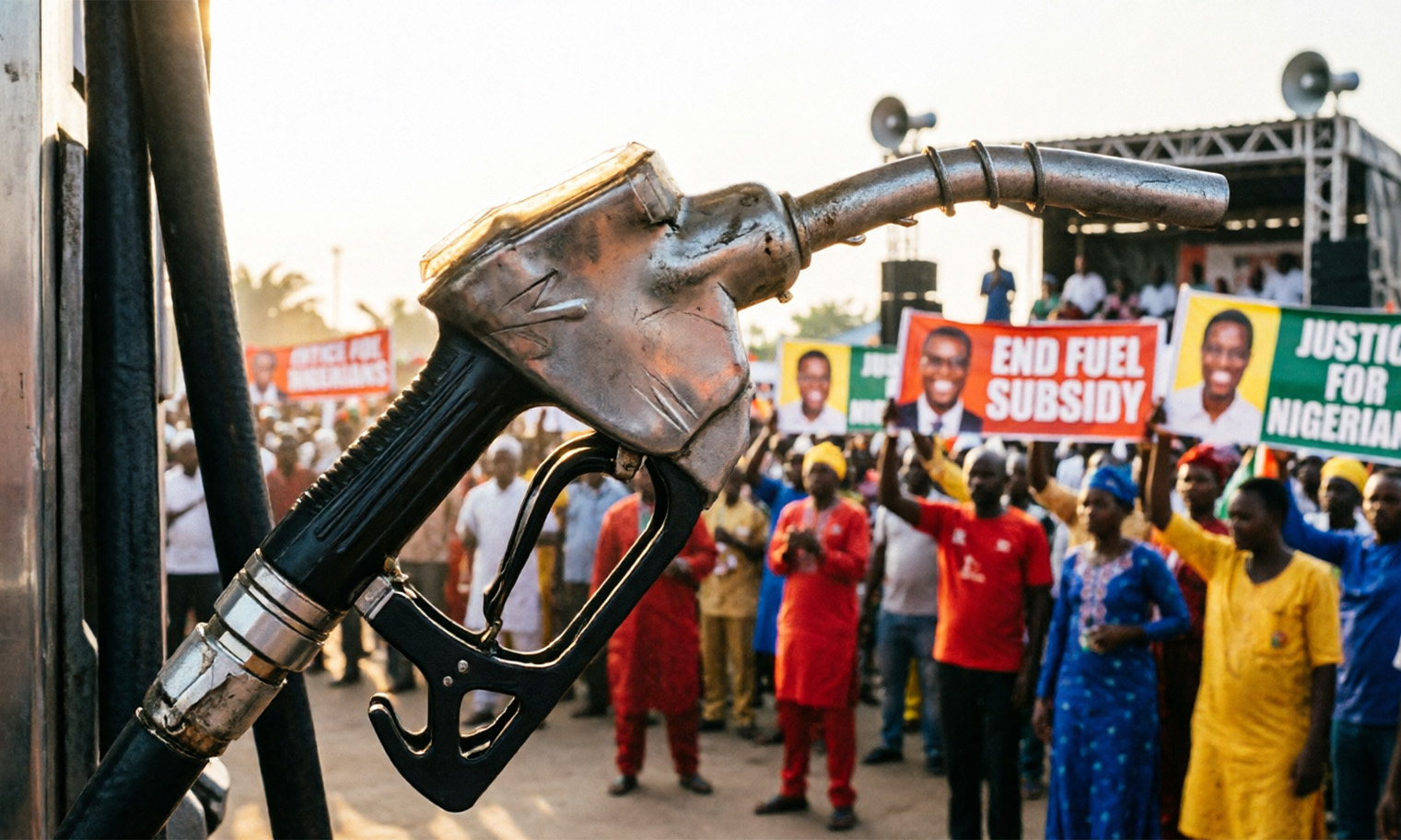
Nigeria’s fuel subsidy debate has resurfaced in public discourse as the country heads toward its 2027 election cycle, with economists and opposition figures clashing over whether the 2023 subsidy removal helped or hurt ordinary Nigerians.
Atiku Abubakar wants his old policy back. The one he campaigned against.
The African Democratic Congress presidential candidate has made subsidy restoration a centerpiece of his 2027 pitch, a sharp reversal from December 2022, when he promised to scrap fuel subsidies within his first 100 days if elected. Three years and one election loss later, he’s promising the opposite. “Whoever stole the money must refund it,” he said in Hausa, accusing the Tinubu administration of pocketing the savings meant for Nigerians.
The Presidency didn’t take the accusation quietly.
Presidential spokesperson Bayo Onanuga called the restoration pledge retrogressive, fiscally unsustainable, and driven by what he termed pure electoral desperation. Then the government did what governments do when cornered. It produced numbers. Finance Minister Taiwo Oyedele put the total resources freed up for the federation at N15.8 trillion between June 2023 and December 2025, N5.4 trillion landing with the Federal Government, N10.4 trillion distributed across states and local governments.
Prof. Uche Uwaleke, capital market economist, has taken that figure and built a defense out of it.
His argument rests on contrast. The old subsidy regime cost Nigeria roughly N15 trillion between 2006 and 2023, he notes, including N3 trillion burned in just the first five months of 2023 alone, right before Tinubu pulled the plug on his inauguration day. Compare that to N15.8 trillion generated in less than three years post-removal, and the math, on paper, looks like vindication.
But paper doesn’t buy garri.
That’s the gap critics keep pointing to. Nigerians aren’t disputing the revenue figures. They’re disputing where the money went. Transport costs jumped. Food prices followed. Household budgets that were already stretched thin snapped further, and years later, many Nigerians say they still can’t point to the roads, hospitals, or schools the savings were supposed to fund.
Atiku’s proposal tries to answer that gap directly rather than reverse course entirely. His new plan isn’t a return to the old opaque subsidy system. It’s a controlled support mechanism tied to domestic refining, where crude allocations get tracked and verified to ensure savings actually reach consumers instead of disappearing into what he calls an opaque pipeline. Every barrel allocated, tracked. Every benefit, verifiable, at least on paper.
He’s not alone in that lane either. Omoyele Sowore of the African Action Congress has made a similar pledge, arguing government is still quietly subsidising both petrol and the naira despite officially declaring the subsidy era over.
Uwaleke’s counter isn’t to defend implementation. It’s to defend the reform while conceding execution failed. His position separates the policy from its rollout, arguing the removal itself was economically necessary and structurally sound, while the transparency and communication around it collapsed. His prescription reflects that split: expand domestic refining capacity so Nigeria stops importing what it should be producing, build targeted social protection that actually reaches vulnerable households instead of vanishing en route, and make the use of subsidy savings visible enough that citizens can trace naira to concrete road, naira to concrete clinic.
The Dangote Refinery sits at the center of that refining argument, and the Presidency has leaned on it as proof the reform is working as designed. Reversing course now, Onanuga warned, risks discouraging exactly the kind of local investment the subsidy removal was meant to attract in the first place.
Get instant alerts and updates based on your interests. Be the first to know when big stories happen.
Tinubu himself weighed in personally, dismissing Atiku’s plan in blunt terms while hosting Osun State Governor Ademola Adeleke at the State House, telling the room that his rival was simply ignorant of governance and economy.
None of that ends the argument. It just moves it onto the campaign trail.
Petrol prices have already climbed past N1,400 in several states, pressured further by the Strait of Hormuz crisis rattling global oil markets. That’s the backdrop 2027 candidates are campaigning into, rising pump prices meeting a population still waiting to see subsidy savings show up somewhere they can touch.
Uwaleke’s numbers say the reform paid off. Atiku’s supporters say Nigerians are still waiting for their share of the payout.
Both things, for now, remain true.
