

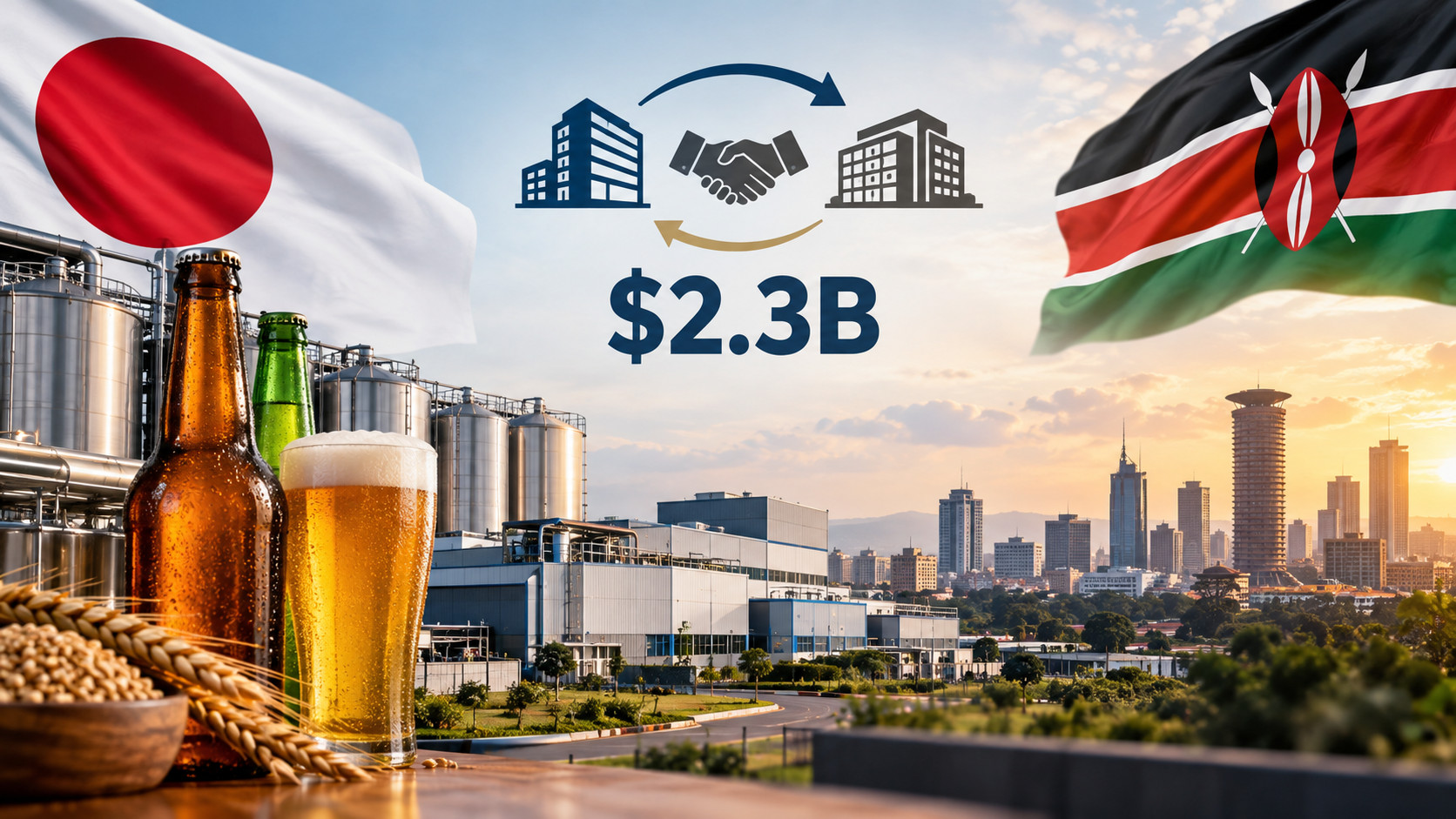
Kenya’s competition watchdog has approved Japanese brewer Asahi Group Holdings’ $2.3 billion acquisition of Diageo’s 65 percent stake in East African Breweries Limited, clearing a deal first announced in December 2025.
The Competition Authority of Kenya said on September 11 that it approved the UDV Kenya portion of the transaction unconditionally, while clearing the Diageo Kenya portion subject to conditions, including a requirement that the merged entity reserve at least 20 percent of retail cooler and refrigeration space for competing beer and cider brands.
EABL must also set aside sufficient funds from the sale proceeds, with CAK having sought roughly Sh15.5 billion in reserves as of August, to cover outstanding liabilities and protect supply continuity for small and medium-sized distributors.
The approval follows a Kenyan High Court dismissal in April of a challenge from distributor Bia Tosha, and gives Asahi sole control of Diageo Kenya Limited as part of Diageo’s broader retreat from African markets to reduce debt.
This deal has never moved in a straight line. Bia Tosha’s court challenge forced EABL to petition Kenya’s chief justice back in June just to speed up the hearings, and even after the High Court threw out that suit in April, CAK still built its own review around protecting the market it was clearing the way to reshape.
What CAK actually looked at goes beyond just who owns what. The regulator assessed how the deal would affect competition in beer and cider production, distribution and retail, plus the knock-on effects for malt and brewing grain supply, alongside broader questions about jobs and investment in Kenya’s economy.
Retail shelf space turned out to be the sticking point. By locking in that 20 percent cooler allocation, CAK is trying to stop a newly merged Asahi-EABL entity from quietly squeezing out rival brands simply by controlling where cold beer physically sits in Kenyan bars, shops and supermarkets. Without that condition, a dominant player controlling both the biggest brand portfolio and the fridge space could throttle competitors without ever technically breaking the law.
The liabilities condition matters just as much, even if it’s less visible to shoppers. CAK wants EABL to guarantee that smaller distributors, the businesses that move Tusker and other EABL products into corner shops and bars across the country, don’t get left exposed if disputes or unpaid claims surface once ownership changes hands.
Get instant alerts and updates based on your interests. Be the first to know when big stories happen.
For Asahi, this deal marks something bigger than a single acquisition. It gives the Japanese brewing giant its first direct operations on the African continent, inheriting a dominant portfolio built around Tusker and a distribution network stretching across Kenya, Uganda and Tanzania. With beer demand plateauing at home and across other mature markets, East Africa’s younger population and expanding middle class represent exactly the kind of growth story Asahi can’t find in Tokyo or Osaka anymore.
Diageo, meanwhile, keeps shrinking its African footprint by design, not accident. The London-listed drinks giant has already offloaded businesses in Nigeria, Ghana, Cameroon, Ethiopia and Seychelles, treating this Kenyan exit as one more piece of a deliberate strategy to cut debt and refocus on its core spirits business globally. Even after selling its ownership stake, Diageo isn’t disappearing from Kenyan shelves entirely: licensing arrangements will keep EABL producing and distributing Diageo brands like Smirnoff, Captain Morgan and Guinness.
CAK’s approval clears the biggest regulatory hurdle, but it isn’t the finish line. The transaction still needs to close, with ownership formally transferring and payment changing hands, before Asahi’s takeover of one of East Africa’s most recognisable consumer brands becomes official.