

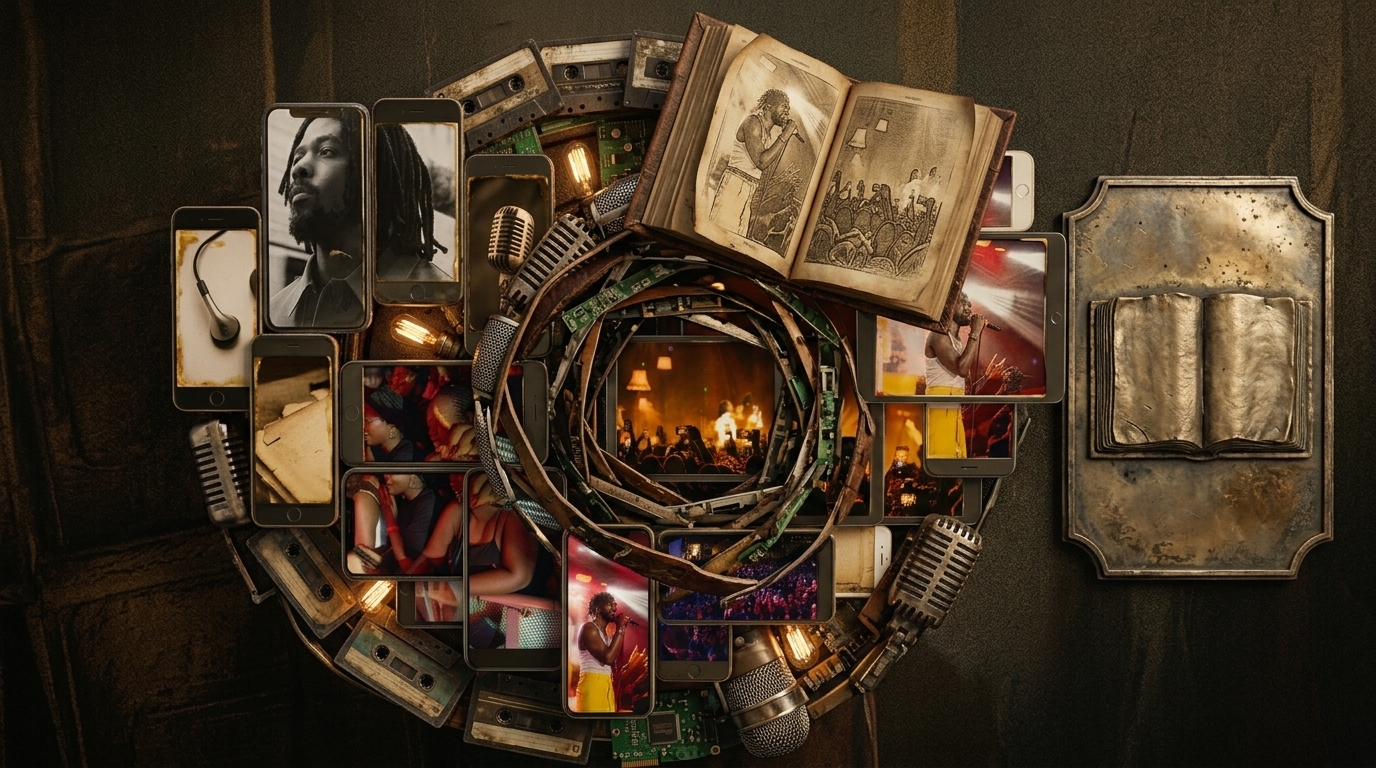
It is not a stadium. It is not a glittering, corporate-sponsored arena where the air is thick with the smell of overpriced lager and performative hype. It is “Johnny’s Room Live,” and the atmosphere inside is less a concert and more an auditory communion. When John Ighodaro, the man the world knows as Johnny Drille steps up to the microphone, the chatter dies. Not the polite, anticipatory hush of a crowd waiting for a drop, but the profound, breathless silence of a congregation that has finally found its altar.
In an era defined by the algorithmic churn of 15-second viral hooks and disposable Afropop bangers, Johnny Drille has cultivated something that music journalists lazily reach for but rarely understand: a metaphorical cult-like following. I do not use the word “cult” to imply danger or delusion. I use it to describe a fierce, almost spiritual devotion. because let’s be honnest, Johnny’s fans do not just stream his music; they inhabit it. They treat his discography like a sacred text for the brokenhearted, the weary, and the quietly hopeful. And this is a bitter truth that the music and entertainment analysts do not want to admit but I will say it without any fear of bashing, that he has more core-loyal fans than the hype out there.
And maybe you don’t agree with my asertion, but to fully understand this phenomenon, you have to go back to the beginning, before the machinery of the music industry got its hands many artists like him.
Born on July 5, 1990, in Edo State, Nigeria, John Ighodaro was a pastor’s kid. His musical foundation was laid in the choir, surrounded by the raw, unpolished harmonies of the church. This is crucial context. When you listen to Drille, you are not hearing a manufactured pop star; you are hearing a man who learned to sing by trying to reach something higher than himself.
His breakthrough did not come from a million-dollar marketing campaign. It came in 2015, when he uploaded a humble, acoustic cover of Di’Ja’s “Romeo & Juliet”. It was stripped down, vulnerable, and utterly magnetic. It stopped the scroll. It made people look up from their phones and actually listen. That cover was a quiet declaration of intent: here was a voice that sounded like worn-in leather and honey, carrying a weight that belied his age.

By February 28, 2017, the industry came knocking. Don Jazzy, the architect of modern Nigerian pop, signed Drille to Mavin Records. For many artists, this is the moment they are swallowed by the machine, smoothed out, and repackaged for mass consumption. The pressure to conform to the upbeat, dance-driven Afrobeats formula is immense. Big labels want hits, not hymns.
But Drille resisted. He navigated the label system with a stubborn, quiet grace. He gave them “Wait for Me” in 2015 and the official “Romeo & Juliet” single in 2017, but he infused them with a folk-soul sensibility that refused to be diluted. When he released “Hallelujah” featuring Simi in 2018, it wasn’t just a song; it was an anthem of resilience that resonated deeply with a generation grappling with economic and social fatigue. When he released “Hallelujah” featuring Simi in 2018, it wasn’t just a song; it was an anthem of resilience that resonated deeply with a generation grappling with economic and social fatigue. He proved that you could be signed to a hit-making factory and still make art that demanded you sit down and feel something. Abi you still don’t agree?
This authenticity is the bedrock of his cult-like following. His fans recognize that he is not selling them a fantasy. He is singing about their reality.
When his debut studio album, Before We Fall Asleep, dropped on September 3, 2021, it was a masterclass in emotional architecture. It was not an album designed for the club. It was an album for the 2 a.m. drive home, for the moment you stare at the ceiling and wonder if you are doing life right. Tracks like “How Are You (My Friend)” and “Count On You” functioned as musical therapy. He wasn’t just singing; he was checking in on you.
And then, there is the man himself. In an industry where personal lives are commodified and relationships are used for clout, Drille’s personal narrative is a testament to his grounded nature. He recently revealed that he met his wife, Rima Tahini, while they were both at Mavin Records, and they dated in secret for five years before going public. In a world of performative romance, this quiet, steadfast loyalty only deepens the reverence his fans hold for him. He lives the same values he sings about.
Now, in 2026, Drille has returned with his sophomore album, Before The Morning Light, released on May 15 via Mavin Records. If Before We Fall Asleep was the honest confession of the night, Before The Morning Light is the quiet, resolute hope of the dawn. It is a 14-track affirmation that he has not lost a step, nor has he compromised his vision. He has only grown more assured in his sonic identity.
Get instant alerts and updates based on your interests. Be the first to know when big stories happen.
So, why does this “cult” follow him so fiercely? I know it is a question everyone have and want answers to and without the fear of been labeled as a Johnny Drille’s apologist.

Because Johnny Drille offers something increasingly rare in modern music in an environment that have more options to choose from: permission to be soft. In a cultural setting that often equates volume with value and aggression with authenticity, I will say Drille’s gentle, folk-infused Afropop is a radical act that ge has embraced to set himself apart. His live shows are not about spectacle or hypes; they are about shared vulnerability. I mean, after reading this piece, go on YouTube and you will see that when he sings, time slows down. His fans know that in his room, they are safe. They know he will not judge their scars. Because he first of all shows them his own fresh wounds and old scars.
There is a moment in his live performances where the crowd sings his lyrics back to him, not with the frantic energy of a pop concert, but with the unified, swelling harmony of a choir. It is a beautiful thing to witness. It is the sound of thousands of isolated individuals realizing, through the medium of one man’s guitar and voice, that they are not alone.
Johnny Drille is not just a your regular singer. He is a curator of solace. And in a world that is constantly screaming to be heard, the quiet, unwavering devotion of his followers is the loudest testament to his genius. The morning light is coming, and thanks to him, we are finally ready to face it. I hope I mean any sense at all with all of this but one thing you cannot do is disagree with the truth.