I want you to go back to March 10, 2006, for a moment.
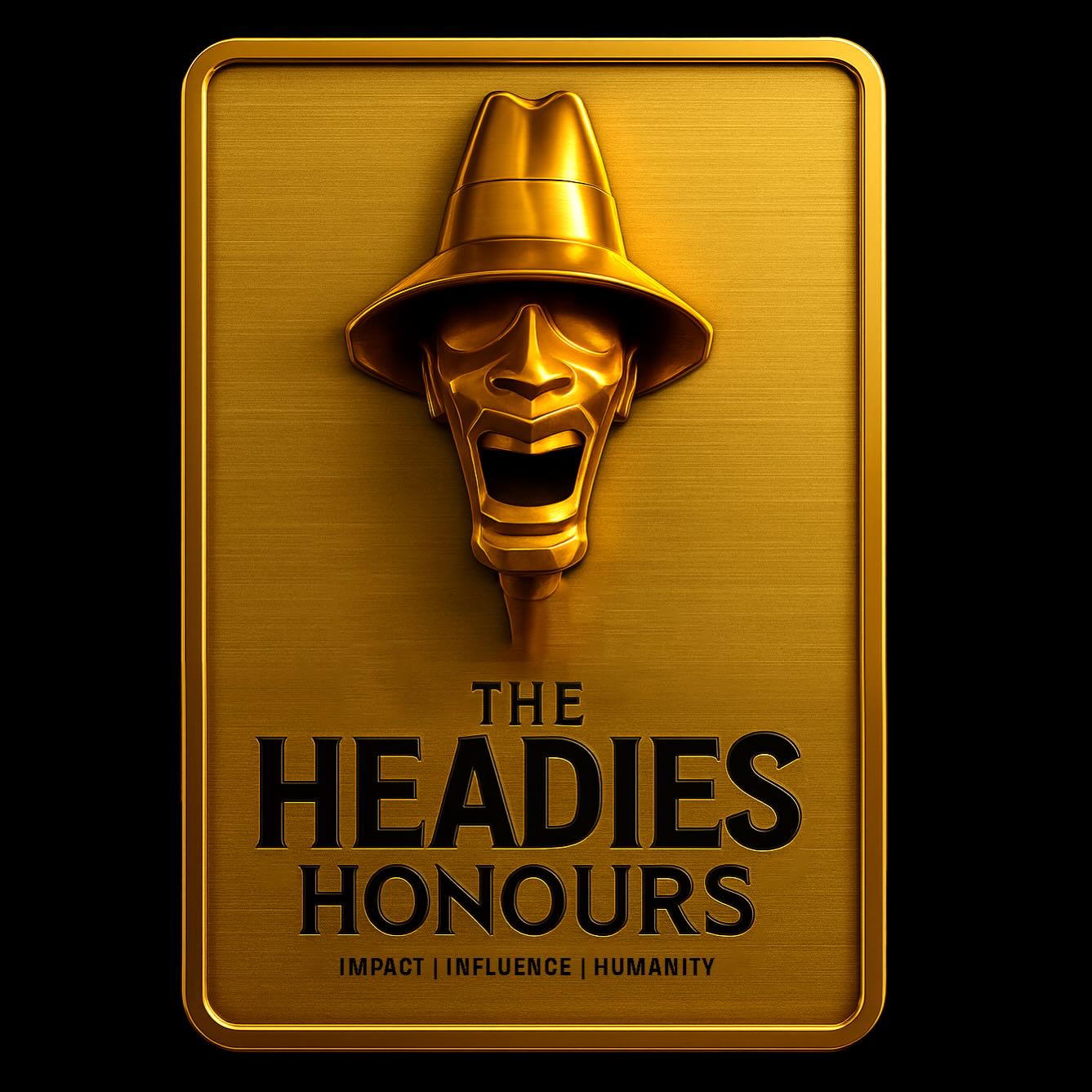
A small ceremony is taking place at the MUSON Centre in Onikan, Lagos. The hall is not full. The cameras are basic. The production is modest by every standard you would apply today. A publisher named Ayo Animashaun, who runs a magazine called Hip Hop World, has organised Nigeria’s first dedicated music awards night. He has a vision, and it is sitting in the shape of a gold-plated, head-shaped trophy that he has named the Headie.
Nobody in that room that night knows what they are sitting at the beginning of.
Twenty years later, on October 23, 2026, that same award is taking over Toronto, Canada, under the theme “Africa to the World,” with 213 nominations spread across 35 categories, an unknown 23-year-old named FOLA leading the pack with 10 nods, Wizkid and Davido in the mix, and an entire continent watching.
Let me take you through every part of how it got here.
Where It Started: A Magazine, a Vision, and a Gold Trophy
Ayo Animashaun did not set out to build Africa’s biggest music awards show. He set out to recognise Nigerian artists that the rest of the industry was ignoring.
In 2006, Nigerian music was in a strange place. It was being made. It was being heard. Artists like D’banj, 2Face Idibia, P-Square, and Faze were building careers that would eventually change how listeners everywhere understood African pop music. But there was no formal, credible platform that gathered them together in one room, handed them a trophy, and said: this is excellent work and it deserves to be named.
Animashaun built that platform. He called the first edition the Hip Hop World Magazine Award, which is a name that does the job without inspiring much poetry. The first Best Recording of the Year went to Lagbaja and Ego for Never Far Away. The first African Artiste of the Year went to Ghanaian hip-hop group VIP. P-Square won Artiste of the Year.
In 2011, the awards were renamed The Headies, after the trophy itself. That trophy, a 21-carat gold-plated head, was conceptualised by Animashaun and drawn by artist Matthias Aragbada. He has explained the design with a clarity that tells you exactly what he was building: the expression on the face is one of “success, victory, and triumph.” It represents “a face of someone that wants to succeed.”
Over the following decade, The Headies became the most important night in Nigerian music. Not because it was always right in its choices. Not because it was always free of controversy. But because it was the room where Nigerian music took itself seriously, and because that seriousness was contagious.
The Milestones That Shaped the Show
Here is a few specific moments from The Headies history, because often times they tell you more about what the show means than any summary could.
The Next Rated category is one of the most watched in Nigerian music, and it has produced some of the most accurate forecasts of long-term stardom in the industry’s history. Burna Boy shared the Rookie of the Year award in 2012. Fireboy DML dominated the 14th edition in 2021, winning multiple categories off the strength of his debut work. Wizkid, Davido, and Rema have all been through that category at various points in their early careers.
The show also came with a car. Every Next Rated winner receives a vehicle alongside their trophy. In 2022, that vehicle was a brand new Bentley Bentayga. BNXN was the first recipient of that particular prize. The Headies pointed out at the time that it is one of the few African music award shows that consistently delivers on its prize promises, in direct contrast to others on the continent that have been criticised for failing to follow through.
The 15th edition in 2022 was the first time The Headies left Nigerian soil. Animashaun took the show to the Cobb Energy Performing Arts Centre in Atlanta, Georgia, and the decision was seismic. Anthony Anderson of Black-ish fame co-hosted alongside Nollywood actress Osas Ighodaro. Nigerian singer Fireboy DML called the decision “groundbreaking.” M.I. Abaga described the Atlanta night as “truly historic,” calling The Headies the first award show that “gave validation” to African artists.
Animashaun explained his thinking with a directness I want you to hold onto: “I want the world to see how talented Afrobeats artists are, and for them to see beyond the names they already know.”
That sentence is the entire philosophy of The Headies in one line.
The 17th edition returned home. Themed “Back to Base,” it was held at the Landmark Event Centre in Victoria Island, Lagos, on April 27, 2025, hosted by Nancy Isime. Ayra Starr, Rema, and Tems led the nominations in a night the organisers themselves have called historic. Odumodublvck, who won Next Rated, refused to leave the stage after receiving his award, in a moment of defiance that the Nigerian internet discussed for weeks.
And then the 18th edition was delayed. Originally scheduled for December 2025 as part of the Detty December calendar, it did not happen. The reasons given were logistical. The conversation in the industry was a little more complicated than that. But the delay is now behind us, because the show is confirmed, the nominees are announced, and Toronto is ready.
The 18th Edition: What You Need to Know
The 18th Headies Awards will take place on October 23, 2026, in Toronto, Canada. This date is confirmed directly by The Headies’ official website, which lists the ceremony for 9 p.m. that night, with red carpet access beginning at 5 p.m. Some outlets circulated October 25 in their initial coverage this week, but the organisers’ own ticketing and events pages are unambiguous: October 23 is the date. The theme is “Africa to the World.” This marks the show’s return to an international venue after the 17th edition’s Lagos homecoming, and it follows a wider three-day Headies Week in Toronto that also includes a Trade and Investment Summit and a Creative Summit on October 22.
The eligibility window for this edition is wider than any previous Headies cycle: music released between August 1, 2024, and April 30, 2026, qualifies. That almost two-year window raised eyebrows when it was announced, and I think the eyebrow-raising was fair. The practical consequence is that the show is recognising a longer stretch of musical output than usual, which means the competition field is broader and the frontrunners have had more time to accumulate impressive bodies of work.
213 nominations were distributed across 35 categories. The announcement was made on Tuesday, August 25, 2026.
The Nominees Who Are Leading the Conversation
I want to take you through the key names, because this edition has a story inside the nominations that is worth telling carefully.
FOLA: 10 nominations, the most of any artist this edition.
Odunlami Afolarin Temiloluwa, known professionally as FOLA, is 23 years old. Until recently, most of Nigeria’s general music audience had not heard of him. His debut album, Catharsis, changed that. He has secured nominations spanning Album of the Year, Next Rated, Songwriter of the Year, Best Male Artiste, Best R&B Album for Catharsis, Best Recording of the Year, Digital Artiste of the Year, and Song of the Year, among others, following the success of Catharsis and his hit single “You.”
I want you to understand what 10 nominations for a debut artist means in the context of this award show. It means the industry has looked at his first body of work and decided it is not merely promising. It is competitive with the biggest names in Nigerian music. That is a rare and serious statement, and it is his first appearance on a Headies nomination list at all.
Omah Lay: 8 nominations.
Omah Lay has been one of the most consistently nominated artists at The Headies since his emergence. His album Clarity of Mind earned him nominations including Afrobeats Album of the Year. He is one of the most credible presences in any Headies category he enters.
Wizkid and Mavo: 7 nominations each.
Wizkid’s Morayo album continues to accumulate recognition. It is nominated for Album of the Year and Afrobeats Album of the Year, among other categories. Mavo, another emerging name, mirrors FOLA’s positioning as a new-generation voice earning serious recognition in the same breath as an established global star.
Davido and Asake: 6 nominations each.
Davido’s collaboration with Omah Lay, “With You,” appears in Song of the Year and Afrobeats Single of the Year. Asake’s “Jogodo,” his collaboration with Wizkid, appears in Afrobeats Single of the Year. Both artists have remained commercially dominant across the eligibility window.
Ayra Starr and Tiwa Savage: 5 nominations each, the most nominated female artists.
“Hot Body” by Ayra Starr is in the Song of the Year category. Tiwa Savage’s This One Is Personal is in the Album of the Year race. The female representation at this edition is notable, with Ayra Starr and Tiwa Savage joined by Kunmie, Shoday, Qing Madi, Sewa, and Teni across various categories.
Burna Boy is nominated for Album of the Year for No Sign of Weakness, among other categories.
Adekunle Gold, BNXN, Rema, Shallipopi, and Blaqbonez are among the other recognisable names across the 35-category list.
The Special Honours That Tell You Where the Show Is Looking
Two of the 18th edition’s special recognitions deserve more attention than they have received in the early coverage.
The Hall of Fame Award goes to Awilo Longomba, the legendary Congolese singer and guitarist who has been performing since the 1980s. His music, rooted in Congolese rumba, reached across West Africa decades before the term Afrobeats existed. Honouring him at a Nigerian music awards show with a continental theme is not an arbitrary choice. It is a statement that The Headies is now deliberately placing itself inside a larger African musical lineage, not just a Nigerian one.
Get instant alerts and updates based on your interests. Be the first to know when big stories happen.
The Special Recognition Award goes to Cecil Hammond, a Nigerian entertainment executive whose behind-the-scenes contributions to African entertainment infrastructure have shaped the industry in ways that rarely make the front page. Recognising executive and management talent alongside artist talent is a maturity that the show has developed over its 20 years.
What This Edition Means for Africa
Let me step back from the nominees list and talk to you about what The Headies, and specifically this Toronto edition, represents for the continent.
In 2006, when Animashaun first handed a Headie to Lagbaja in a modest Lagos venue, Afrobeats was not a word that appeared in the New York Times, the Guardian, or Rolling Stone. It was not the subject of billion-dollar streaming deals or Grammy category conversations. It was Nigerian music, made for Nigerian people, recognised by a Nigerian magazine.
What happened between that night and tonight in Toronto is one of the most remarkable cultural export stories in modern history.
Nigeria’s music industry is now worth over $100 million in recorded music revenue annually, according to IFPI data. Afrobeats streams in the hundreds of billions across Spotify and Apple Music every year. Nigerian artists fill stadiums in London, Houston, Paris, and now Toronto. The BET Awards, as we reported earlier this year, have now created history by nominating Wizkid and Asake in the Best Group category for their joint project. The cultural credibility of the music made in Lagos, Port Harcourt, and Abuja is no longer a matter of Nigerian pride alone. It is a matter of global musical record.
The Headies did not cause all of that. But it helped build the confidence that made it possible. It was the room where Nigerian artists first saw their work reflected back at them as worthy of formal, serious recognition. It was the stage where the industry rehearsed its own belief in itself, before international audiences arrived to share that belief.
Now the show is in Toronto, under the theme “Africa to the World,” with a Congolese legend receiving a Hall of Fame award, and 23-year-old FOLA standing at the head of the nominations list with 10 nods and a debut album called Catharsis.
Catharsis. The release of built-up emotional tension. The word Afolarin chose for his first album is, whether he intended it this way or not, a precise description of what African music has been doing for the past decade. Releasing something. Making listeners feel something they did not know they were carrying.
That is what October 23 in Toronto is about. And that is why The Headies, 20 years from a modest Lagos venue to a Canadian concert hall, still matters as much as it ever did.
What I Am Watching For on the Night
I will be honest with you about what interests me most when the ceremony unfolds.
The first is FOLA. Ten nominations for a debut artist at Nigeria’s premier music awards is not just impressive. It is a declaration by the industry that a new generation has arrived and is ready to be taken seriously alongside the names we have been following for a decade. Whether he wins or loses in October, the nominations themselves have already changed his career.
The second is the Next Rated category, which has produced more accurate predictions of long-term stardom than any other award in Nigerian music. The name that wins Next Rated in Toronto will be a name you should write down.
The third is the Album of the Year race, which features FOLA, Tiwa Savage, Wizkid, Burna Boy, Omah Lay, Erigga, and Odumodublvck. I cannot remember a recent Headies where that category contained more legitimate contenders for the prize. Every album on that list has a credible case for the award. That is a competition worth watching closely.
And the fourth is the crowd. The Headies in Toronto will attract the Nigerian and African diaspora in Canada, one of the fastest-growing African communities in North America. The energy of a diaspora crowd at a celebration of African music, far from home, is a different kind of electricity. Ask anyone who was in Atlanta in 2022. They will tell you.
October 23 cannot arrive quickly enough.