

Nigeria-South Africa relations have entered another dangerous phase. Abuja wants compensation for Nigerians whose businesses and property were destroyed or abandoned. Pretoria wants millions of dollars for repatriating migrants. Then six Nigerians accused of a $6m romance scam are extradited to America after spending five years in South Africa’s custody. The timing is raising questions neither government appears eager to answer.
At least you will agree with me that there are moments in international politics when the timing of events becomes almost as important as the events themselves.
This is one of them.
Nigeria and South Africa are once again locked in a diplomatic confrontation.
Nigerians have been killed in South Africa and by we can understand Nigeria’s quest for justice and demand for accountability.
Nigerian businesses have been attacked in South Africa by South Africans.
Nigeria has evacuated citizens.
By this, Abuja wants compensation for property and economic losses.
Pretoria in return wants Nigeria and other African countries to reimburse the cost of repatriating their citizens, a bill or maybe I should called this invoice reported at roughly $18 million.
Nigeria has pushed back.
Then, on September 11, 2026, six Nigerian nationals as known as Perry Osagiede, Collins Owhofsa Otughwor, Osariemen Eric Clement, Musa Mudashiri, Franklyn Edosa Osagiede, and Prince Ibeabuchi Mark were handed over by South Africa to American authorities.
They had been arrested in Cape Town in 2021 and are accused by US authorities of belonging to the Black Axe organised-crime network and participating in romance scams that allegedly defrauded more than 100 American women of more than $6 million.
The six men were eventually transferred to the FBI and US Secret Service.
And suddenly, an old criminal case became entangled in a very new political question:
Was this simply justice finally taking its course – or was South Africa also sending Abuja a message?
There is no evidence currently available proving the latter. As of yet, no one possesses the answers at present.
But the question is not coming from nowhere.
The timing is extraordinary. Isn’t it?
THE $18 MILLION QUESTION
Start with the money.
To help answer this $18 million question, let us establish a broader intellectual context, one that allows us to argue these propositions without relying on assumptions.
South Africa says it spent almost $18 million repatriating and deporting migrants during its crackdown on undocumented foreigners.
Pretoria wants countries including Nigeria, Malawi and Ethiopia to reimburse some of those costs. Reports put the South African government’s expenditure at around $18 million.
Nigeria’s position has been considerably less enthusiastic.
And it is not difficult to understand why.
Because Abuja has another bill. Again i prefer to call this an invoice.
Nigeria is documenting the property and economic losses suffered by Nigerians during the latest wave of attacks.
Nigeria’s House of Representatives has moved to investigate those losses and establish a basis for compensation claims.
The Federal Government has also said forms were being prepared for Nigerians who lost property in South Africa so their losses could be documented as part of compensation discussions with Pretoria.
So, stripped of diplomatic language, this is what the two countries are effectively saying:
South Africa:
“You owe us for taking your people home.”
Nigeria:
“What about what our people lost while living in your country?”
South Africa:
“That is not our financial responsibility.”
Nigeria:
“Then why is your repatriation bill ours?”
That is the dispute nobody can explain away with a press release.
THIS IS NOT A NEW ARGUMENT
The compensation issue goes back years.
After the 2019 xenophobic attacks, Nigeria demanded compensation for Nigerians whose businesses and property had been damaged.
At the time, Pretoria had resisted the demand, arguing that victims should pursue restitution through insurance rather than expect the South African government to compensate them directly.
Reporting at the time noted that South Africa had taken similar positions after the xenophobic violence of 2008 and 2015.
Nigeria’s 2019 demand was explicit.
The Nigerian government wanted compensation and a mechanism to prevent another outbreak of violence.
That history matters.
Because Nigeria’s demand in 2026 is not a brand-new invention created to embarrass Pretoria.
It is the reopening of a dispute that never truly disappeared.
2008: THE ORIGINAL WOUND
The modern Nigeria-South Africa xenophobia crisis can be traced back to the horrific violence of 2008.
Foreign nationals were attacked in several South African communities.
South Africa’s own government condemned the violence and acknowledged that foreigners from across the African continent were being targeted.
These attacks established a pattern that would return repeatedly:
economic frustration → anti-immigrant mobilisation → violence → deaths and property destruction → diplomatic outrage → emergency evacuation → promises of reform → temporary calm.
Then it happened again.
2015: ROUND TWO
Another wave of anti-foreign violence erupted in 2015.
Again, Nigerians were among those affected.
Again, the Nigerian government protested.
Again, questions were raised over whether South Africa was doing enough to protect foreign nationals.
And again, the fundamental disagreement remained unresolved.
South Africa viewed the issue through the lens of unemployment, illegal migration, crime and pressure on public services.
Nigeria viewed it through the lens of the protection of its citizens.
Both sides had legitimate concerns.
But the failure to establish a durable solution meant the same argument simply waited for the next explosion.
2019: THE RELATIONSHIP ALMOST BREAKS
Then came 2019.
The violence against foreign nationals in Johannesburg and elsewhere produced one of the most serious diplomatic crises between Abuja and Pretoria since the end of apartheid.
Nigerian-owned businesses were targeted.
Nigeria demanded compensation and accountability.
South African companies operating in Nigeria were threatened in the resulting backlash.
The Nigerian government summoned South Africa’s diplomatic representatives.
Eventually, President Muhammadu Buhari travelled to South Africa for talks with President Cyril Ramaphosa.
The two governments condemned both the attacks against foreigners in South Africa and retaliatory attacks against South African interests in Nigeria.
Ramaphosa expressed regret over the violence and said South Africa remained committed to prosecuting people involved in criminal activity regardless of nationality.
For a while, diplomacy appeared to have won.
It hadn’t.
The underlying problem was merely sleeping.
2026: THE OLD FIRE RETURNS
This year, the fire came back with more smoke.
Anti-immigrant protests spread across South Africa.
Nigerians were among the foreigners caught in the unrest.
Nigeria accused South Africa of failing to adequately protect its citizens.
South Africa condemned xenophobia but also insisted that concerns about illegal immigration and criminality could not simply be ignored.
Nigeria began evacuating citizens.
By July, Nigeria said it had brought 1,490 Nigerians home through a series of voluntary evacuation flights.
And Abuja’s rhetoric became increasingly sharp.
Foreign Minister Bianca Odumegwu-Ojukwu reminded South Africa of Nigeria’s historic support for the anti-apartheid struggle and warned that Nigeria was considering retaliatory measures.
That was no longer routine diplomatic language.
It was a warning by Nigeria.
THEN THE AFRICAN UNION ENTERED THE FIGHT
The dispute was no longer confined to Abuja and Pretoria alone.
Ghana pushed for the issue of xenophobic attacks in South Africa to be discussed at the African Union level.
Nigeria backed the broader pressure.
South Africa resisted being singled out.
Pretoria instead pushed for a broader continental conversation about migration.
And this is where the argument became much bigger than Nigeria.
The question was no longer simply:
“Are Nigerians safe in South Africa?”
It became:
“What does xenophobia against African migrants say about the future of Pan-Africanism?”
Nigeria and Ghana wanted the issue elevated.
South Africa wanted the conversation widened.
The diplomatic battle was real.
Pretoria naturally sought to avoid being placed in the continental dock; as an escalation of this magnitude invariably compromises a nation’s diplomatic standing and credibility.
NIGERIA’S PARLIAMENT FINALLY FIRED BACK
Then came another escalation.
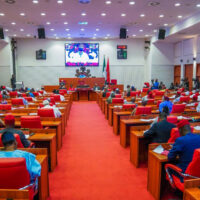
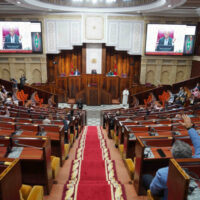
On September 11 – the very day the six Nigerians were being handed over to US authorities, Nigeria’s parliament suspended official visits and legislative participation involving South Africa over anti-migrant violence.
Reuters reported that Nigerian officials said 98 Nigerians had died in mob, hate-related and extrajudicial incidents in South Africa since 2022, while 1,695 Nigerians had voluntarily evacuated South Africa in 2026.
The timing could hardly have been more dramatic.
Nigeria was effectively saying:
Enough.
And on the same day, South Africa was handing six Nigerians to America.
THEN CAME THE SIX MEN
The suspects are accused of being members of Black Axe (Confraternity) and participating in romance scams.
According to South African police, more than 100 American women were allegedly targeted.
The alleged losses exceeded $6 million.
The victims reportedly included pensioners and businesspeople.
The charges include wire fraud and money laundering.
Those are serious allegations.
But there is a fact that completely changes the political interpretation.
These men were arrested in 2021.
Not 2026.
Not after Nigeria rejected South Africa’s reimbursement demand.
Not after the latest xenophobic attacks.
2021.
I do not doubt that these crimes demand justice, regardless of when they occurred; however, the timing of these developments raises important questions that must be addressed
The extradition process therefore predates almost everything currently driving the diplomatic confrontation.
That is the strongest evidence against the theory that the extradition was invented as punishment for Abuja.
THE CASE WAS ALREADY MOVING
This is where the conspiracy theory encounters an inconvenient fact.
The suspects had already been caught inside a South African legal process.
The United States had already requested them.
South African courts had already dealt with the extradition question.
And South Africa had already extradited another alleged Black Axe leader to the United States before the current crisis.
In other words:
Pretoria and Washington were already cooperating against this network long before the current Nigeria-South Africa dispute.
That matters.
A lot.
It makes the claim that the September extradition was simply South Africa’s revenge against Nigeria much harder to sustain.
BUT HERE IS THE PART THAT SHOULD MAKE EVERYONE UNCOMFORTABLE
The fact that the extradition was probably a legitimate criminal proceeding does not make the timing irrelevant.
Get instant alerts and updates based on your interests. Be the first to know when big stories happen.
Politics is rarely that clean.
Consider the sequence.
South Africa says:
“Pay us for repatriating your citizens.”
Nigeria says:
“What about compensation for our citizens’ losses?”
South Africa says:
“Those are not our responsibility.”
Nigeria and Ghana say:
“Then let’s discuss Afrophobia at the African Union.”
South Africa says:
“Do not single us out.”
Nigeria’s parliament says:
“We are suspending official parliamentary engagements.”
Then:
Six Nigerians are extradited from South Africa to the United States.
Even if there is no causal connection, it is almost impossible for the public not to connect the dots.
BUT THERE IS A QUESTION PRETORIA SHOULD ANSWER
If the extradition was entirely routine, South Africa should have no difficulty explaining the chronology.
When was the extradition request received?
When did the South African courts approve it?
What appeals were filed?
When were those appeals exhausted?
When was the final decision communicated to the United States?
When was the September 11 handover scheduled?
And was the timetable established before or after the latest diplomatic confrontation with Nigeria?
Those answers would kill the speculation, or make it considerably more interesting.
Because the easiest way to destroy a conspiracy theory is to release the timeline.
AND THERE IS A QUESTION FOR ABUJA TOO
Nigeria should also explain whether its diplomatic representatives were monitoring the case.
Were Nigerian officials informed before the handover?
Did Abuja raise concerns about the treatment of the suspects?
Were the suspects receiving consular assistance?
And did the Nigerian government receive any indication that the extradition was connected to the broader diplomatic dispute?
These are legitimate questions.
They do not amount to defending alleged criminals.
They amount to demanding transparency when six Nigerian citizens become part of an international criminal case at a politically explosive moment.
THE DANGEROUS POLITICS OF “NIGERIANS”
There is something else that must not be lost in this story.
Six Nigerians allegedly committing crimes does not make Nigerians criminals.
This distinction has become increasingly important because the current South African political conversation has repeatedly mixed immigration, unemployment, crime and nationality.
South African officials themselves have stressed that law enforcement should target individual criminal conduct rather than profile the wider Nigerian community.
That principle is crucial.
If the six men committed the crimes alleged against them, they should face justice.
But if they did not, they deserve due process.
And either way, their nationality should not become evidence against millions of other Nigerians.
THE REAL NIGERIA-SOUTH AFRICA PROBLEM
The extradition is actually a symptom of a much larger problem.
Nigeria and South Africa have never completely resolved their diplomatic and geopolitical rivalries. Despite being Africa’s two most influential Anglophone powers, they remain locked in a perpetual cycle of petty disputes. This friction must end if the continent is to effectively address the core issues of irregular migration and deep-seated poverty.
Instead of cooperating to attract foreign investment, both nations frequently clash over the leadership of continental institutions. This rivalry persists despite the deep cross-border business ties shared by their citizens, overlooking the immense economic mutual benefits generated when their domestic companies operate freely across borders.
Beneath the official rhetoric of ‘brotherly relations’ lies a persistent, deep-seated strategic distrust between the two nations.
Academic research on Nigeria-South Africa relations has described the relationship as a mixture of rivalry, conflict, cooperation and competition.
That may be the simplest description of the entire relationship.
Friends when necessary.
Competitors when convenient.
Enemies when politics demands it.
Partners when business demands it.
THE 2026 QUESTION IS DIFFERENT
While previous bilateral crises were ultimately resolved through formal apologies and diplomatic summits, the current standoff introduces a uniquely combustible combination of factors. Beyond the mounting casualties driven by Nigerian allegations of targeted killings and the mass migration of thousands fleeing South Africa, this dispute is fueled by compounding financial and political stakes. Nigeria is demanding state compensation just as South Africa insists on financial reimbursement, all while Ghana and Nigeria pressure the African Union to directly confront systemic Afrophobia. Now, the escalation has crossed into international criminal justice with the extradition of six Nigerians to face prosecution in the United States, transforming a historical regional rivalry into a volatile, high-stakes international crisis.
SO, IS THIS SOUTH AFRICA’S PAYBACK?
Here is the uncomfortable answer.
We don’t know – but the available evidence does not establish it.
The legal case against the six men appears to have existed independently of the diplomatic dispute.
The arrests happened five years ago.
The extradition process was already underway.
South Africa had previously handed another alleged Black Axe leader to the United States.
The US had a direct criminal interest in securing the suspects.
All of that points toward ordinary international law enforcement.
But the extradition happened at the exact moment the political relationship was deteriorating dramatically.
That creates an entirely different question:
Even if South Africa did not extradite the men as retaliation, did Pretoria understand the political message their extradition would send?
There is no evidence yet to answer that.
And that is precisely where serious investigative journalism should stop.
Not at the point where the evidence ends.
Not at the point where social media speculation begins.
But at the uncomfortable line between the two.
THE BIGGER QUESTION AFRICA SHOULD BE ASKING
There is a much bigger tragedy unfolding here. Two of Africa’s most powerful countries are spending enormous political energy arguing over citizens who should, in theory, be protected by the foundational continental ideal of African solidarity. Historically, Nigeria heavily supported South Africa during its fight against apartheid, a legacy that everyday South Africans still remember. However, this shared history is becoming increasingly difficult to leverage or “cash in” when today’s Nigerians are being forced to leave.
The current standoff highlights a deep policy divide: while South Africa demands stronger border enforcement and expects Nigeria to help foot the bill for repatriations, Nigeria demands greater protection for its citizens and expects South Africa to compensate its nationals for their losses. Although both governments publicly state that they oppose xenophobia and agree that criminals must face prosecution, ordinary citizens find themselves increasingly trapped between these conflicting national narratives.
This disconnect exposes the real crisis at play. The true failure does not lie within the extradition of six individuals, an $18 million invoice, a single African Union summit, or an evacuation flight. Rather, the true crisis is that Africa’s two dominant powers are fundamentally losing the ability to trust one another. When governments lose trust, it is ultimately their ordinary citizens who pay the heaviest price.
The evidence currently supports the extradition as a long-running US-South Africa criminal justice operation, rather than a confirmed act of state retaliation against Nigeria. However, the timing remains politically explosive. Nigeria’s rejection of South Africa’s repatriation demand, Abuja’s claims for compensation, the African Union confrontation over Afrophobia, Nigeria’s parliamentary boycott, and the sudden extradition all collided within the exact same rapidly deteriorating diplomatic environment.