

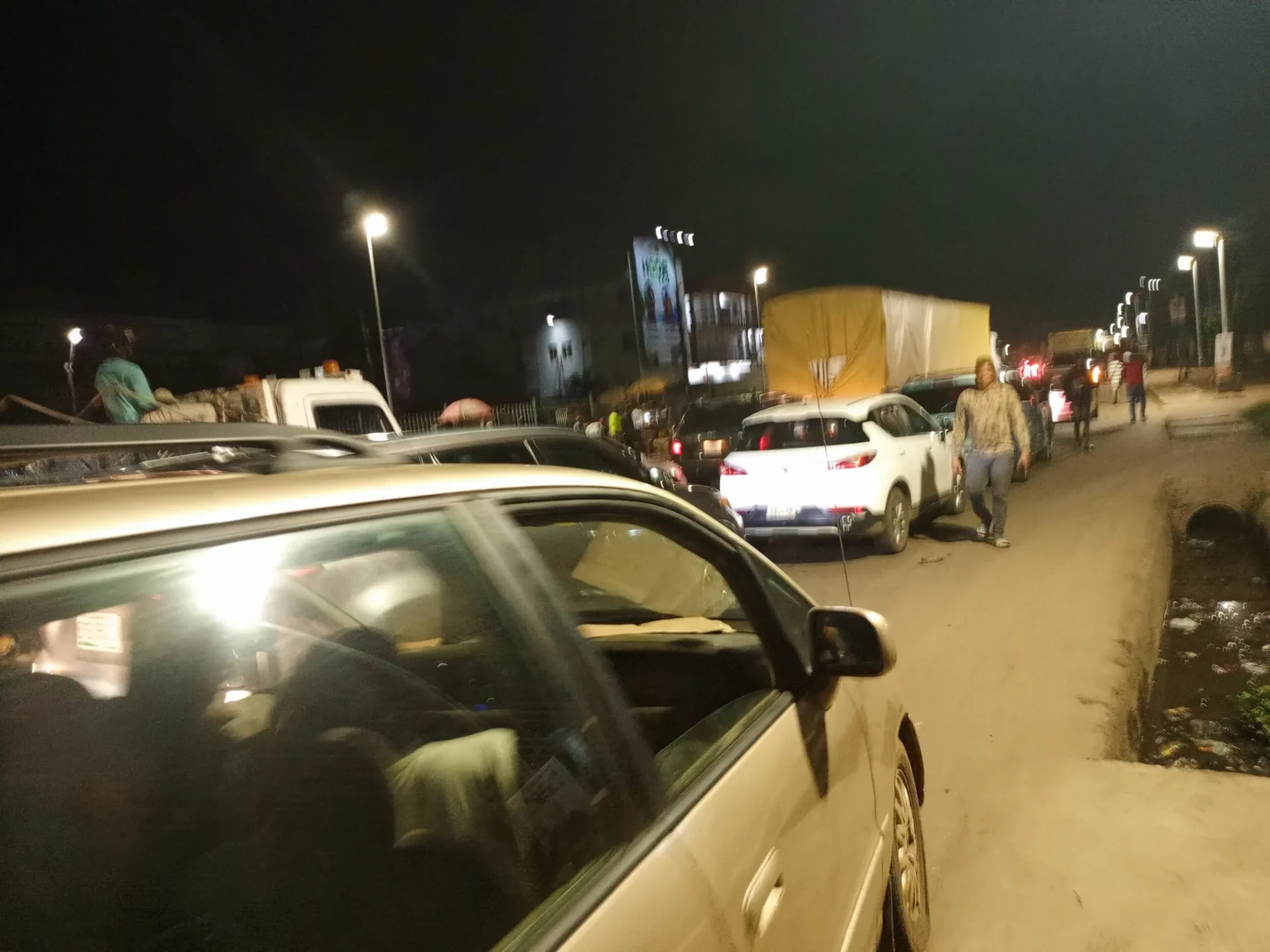
LAGOS NIGERIA: Traffic froze along Lateef Jakande Road around 6:30 p.m. on Tuesday. By 10:19 p.m., it hadn’t moved.
Motorists stretching from Omole Phase 1 through Isheri and into Ojodu Berger sat locked in place for more than three hours. Engines idling. Fuel burning. Patience gone.
A reporter who walked the route from Omole Phase 1 toward Berger described long queues of cars barely inching forward. Isheri took the worst of it, packed with workers and business owners trying to get home after a long day, now stuck in a jam with no end in sight.
Nobody could say why. The cause of the buildup remained unclear even hours in. The Lagos State Traffic Management Authority stayed quiet too, no update, no explanation, nothing posted to its X account as the clock passed 10 p.m.
And where were the officials who usually manage this corridor? Gone. No LASTMA personnel were spotted along the affected stretch during the reporter’s walk through. On a route this busy, that absence stood out.
This isn’t happening in isolation either. The same evening, a separate crisis was unfolding on the Lagos-Ibadan Expressway, where ongoing repairs at Kara Bridge have already triggered hours-long delays and fare hikes stretching from Iyana-Oworo to Mowe. Commuters caught between both flashpoints found themselves squeezed from two directions at once, Berger sitting right at the pressure point.
One motorist stuck near Kara told reporters he’d been on the road since 4 p.m. with zero movement. Fares from Iyana-Oworo to Berger reportedly jumped from around 500 naira to 2,000. Multiply that kind of chaos across the Isheri-Jakande corridor and you get a rough sense of what Tuesday night cost ordinary Lagosians in time, fuel and money.
Get instant alerts and updates based on your interests. Be the first to know when big stories happen.
Lateef Jakande Road has a history of buckling under rush hour, okada riders and roadside traders adding to the squeeze at the best of times. But a three-hour dead stop with no agency response is a different animal entirely.
Commuters on the ground weren’t waiting for LASTMA to catch up. They were already rerouting, already recalculating, already bracing for whatever Wednesday morning’s commute would throw at them next.