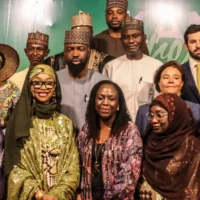

The Kanuri people, also known as Beri-beri, Bornu, or Yerwa, are the dominant ethnic group of Borno Province in northeastern Nigeria. With a population of over 3 million in Nigeria, 500,000 in Niger, 100,000 in Chad, and 60,000 in Cameroon, the Kanuri have a rich and diverse cultural heritage. This article will delve into the history and culture of the Kanuri people, exploring their origins, language, economy, kinship, religion, and sociopolitical organization.
Origins and Early History
The Kanuri people trace their roots back to the ruling Saifawa family of the Kanem Empire, which existed in the 14th century. After leaving Kanem due to civil war, the Saifawa family established the Bornu Empire southwest of Lake Chad. Over the centuries, the Kanuri people incorporated various groups into their society through intermarriage, commerce, and political alliances. Today, the Kanuri are a culturally heterogeneous group, influenced by their interactions with surrounding peoples such as the Budum, Mandara, Kotoko, Marghi, Babur, Bolewa, and Bede.
Language and Communication
The Kanuri language is the most widely spoken language in the Central Saharan Language Family. It is unrelated to the commonly spoken Hausa language in northern Nigeria, although many Kanuri people can speak some Hausa. The Kanuri language has its roots in the ancient Kanem Empire and has spread across northern Nigeria to the Central Sudan. As the largest Central Saharan language, Kanuri serves as a means of communication for a significant population in Nigeria, Niger, Chad, and Cameroon.
Geography and Climate
The Kanuri people primarily reside in Borno Province, located in northeastern Nigeria. The region experiences a typical sub-Saharan savanna climate, with rainfall averaging between 56 to 69 centimeters per year, mostly falling from June to September. The harmattan, a cool wind from the Sahara, blows from mid-December to mid-March, with temperatures reaching up to 38°C. The terrain of Borno is mostly flat, except for the rugged Bauchi plateau in the southwest and marshy areas along the shores of Lake Chad in the east. The region’s soil is sandy, covered with scrub brush, thorny trees, and baobabs.
Economy and Livelihood
The Kanuri people primarily engage in sedentary hoe agriculture, with millet as their staple food crop supplemented by guinea corn. Groundnuts are grown for sale, and fishing provides an important resource for villages along the shores of Lake Chad and the Yobe River. Livestock, such as sheep, goats, and cattle, are commonly kept, with the Kanuri often relying on the pastoral Shuwa and Fulbe cattle herders for beef. Commerce, transportation, and construction also contribute to the Kanuri economy, while government and public-service jobs offer employment opportunities. Manufacturing and industry remain relatively unimportant.
Kinship, Marriage, and Family Structure
The Kanuri society is organized around the virilocal extended family, where each family occupies a single walled compound. However, neolocality, where couples establish their own residence, is more common. Traditional aristocracy and royalty households include slaves, concubines, retainers, and adopted children in addition to the nuclear family. Loyalty to the household head, who provides support and defense, is highly valued, and a man’s prestige is determined by the size of his household and the number of patron-client relationships he maintains.
Marriage customs among the Kanuri vary, with men typically marrying around the age of 20 and women around 14. The preferred form of marriage for men is to a young virgin, but due to the high cost, most men marry divorcees as their first wives. The rate of divorce among the Kanuri is high, with children usually staying with the father in case of a divorce. Polygyny is permitted in accordance with Islamic law, and concubinage is practiced to a lesser extent. Women are legally and socially inferior to men, with various rights denied to them.
Sociopolitical Organization
The Kanuri people reside in settlements of varying sizes, ranging from large cities like Maiduguri to tiny hamlets. Villages typically consist of walled compounds made of mud- or grass-mat-walled houses with thatched conical roofs. Social stratification is more pronounced in towns and cities, where differences in wealth can be significant. Political leadership in the Kanuri society is often held by descendants of aristocratic lineages, but popular elections have introduced commoners to the ranks of political leaders. The Bornu Emirate, a political entity with a history dating back centuries, is led by a shehu (king) who serves as both the political and religious leader.
Religion and Cultural Influence
Islam has been the dominant religion among the Kanuri people since the 11th century. Islamic law, education, and social organization have significantly influenced Kanuri culture. The Malakite version of Islamic law is administered by an alkali (judge), and traditional education centers around the Quran. Islam plays a central role in the daily lives of the Kanuri, with adherence to the full ritual calendar, fasting, and observance of the pillars of Islam. Despite the strong Islamic orthodoxy, some superstitious practices, such as wearing charms and amulets, are also prevalent among the population.
Get instant alerts and updates based on your interests. Be the first to know when big stories happen.
Facts
Kanuri people have a rich and diverse history, culture, and way of life. Their origins can be traced back to the ruling Saifawa family of the Kanem Empire, and they have since incorporated various groups into their society. The Kanuri language is widely spoken, and Islam has had a profound influence on their religious and social practices. With a primarily agrarian economy, strong kinship ties, and a complex sociopolitical organization, the Kanuri people continue to thrive and preserve their unique cultural heritage in northeastern Nigeria and beyond.
Image Source: Unsplash