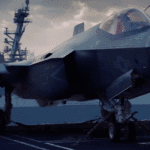





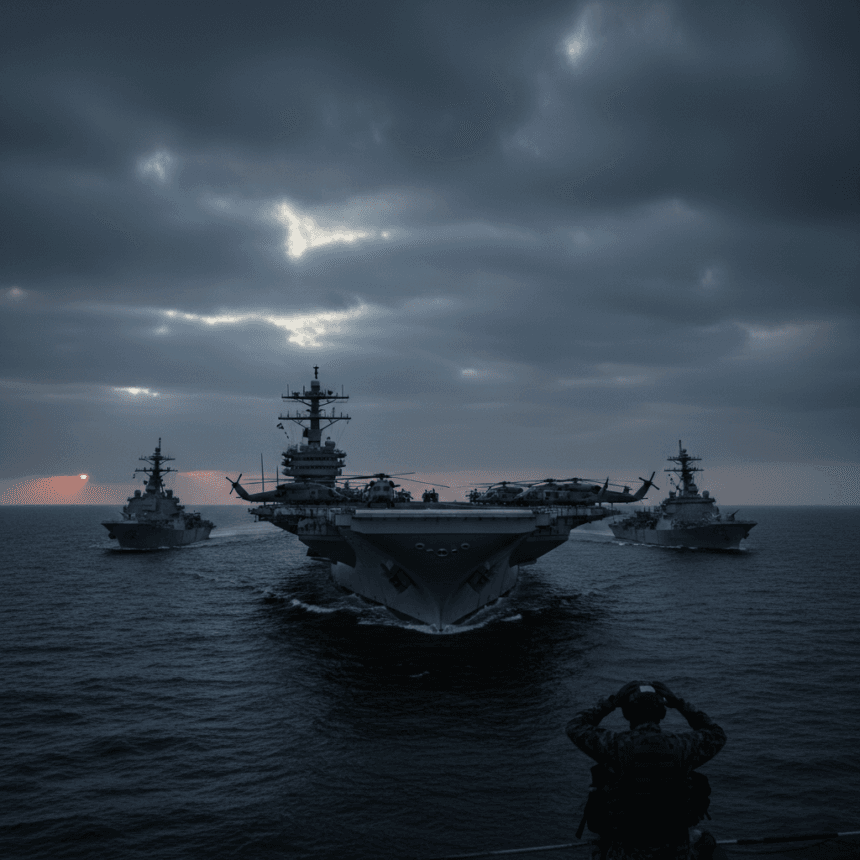
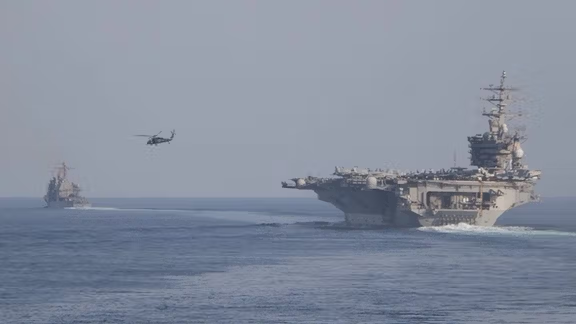
The United States has deployed two aircraft carrier strike groups to the Middle East, positioning its largest regional military presence in decades, as nuclear negotiations with Iran faltered in Geneva this week.
The USS Abraham Lincoln and its accompanying ships arrived in the region more than two weeks ago. The USS Gerald R. Ford, the largest aircraft carrier in the world, is now heading toward the Middle East, according to ship-tracking data and multiple US news outlets.
The two sides held indirect talks in Geneva for three-and-a-half hours on Tuesday, but the session ended with no clear resolution.
Africentra has confirmed the talks produced a limited statement of shared intent. Iran’s Foreign Minister Abbas Araghchi described it as agreement on “guiding principles.” The White House described something narrower.
US Vice President JD Vance said the Iranians had not acknowledged “red lines” set by President Donald Trump. The gap between those two descriptions tells you most of what you need to know about where the talks actually stand.
The White House has been briefed that the US military could be ready to carry out strikes on Iran within days if diplomacy fails, sources familiar with the matter told CNN. Africentra has not independently confirmed a specific timeline. That reporting has not been denied by US officials.
Trump has given Iran between 10 and 15 days to reach a deal, according to statements made Thursday. He has also warned of “something very tough” and “traumatic” consequences if Iran does not comply.
Who made this call? President Donald Trump is directing US strategy. His envoy Steve Witkoff and Jared Kushner are leading the American negotiating team. Iran’s Abbas Araghchi is leading Tehran’s delegation.
If you live in or near the Middle East, this matters in immediate, material terms. Iran partially closed the Strait of Hormuz this week for live-fire military drills, the waterway through which roughly a fifth of the world’s oil supply passes.
Iran’s currency weakened nearly one percent in a single day, with the dollar rising toward 1,630,000 rials, reflecting broader concerns about the risk of escalation. That kind of currency movement signals that markets are pricing in a real possibility of conflict, not just posturing.
For African countries that import oil or whose currencies track commodity prices, a military conflict near the Strait of Hormuz would drive up energy costs immediately.
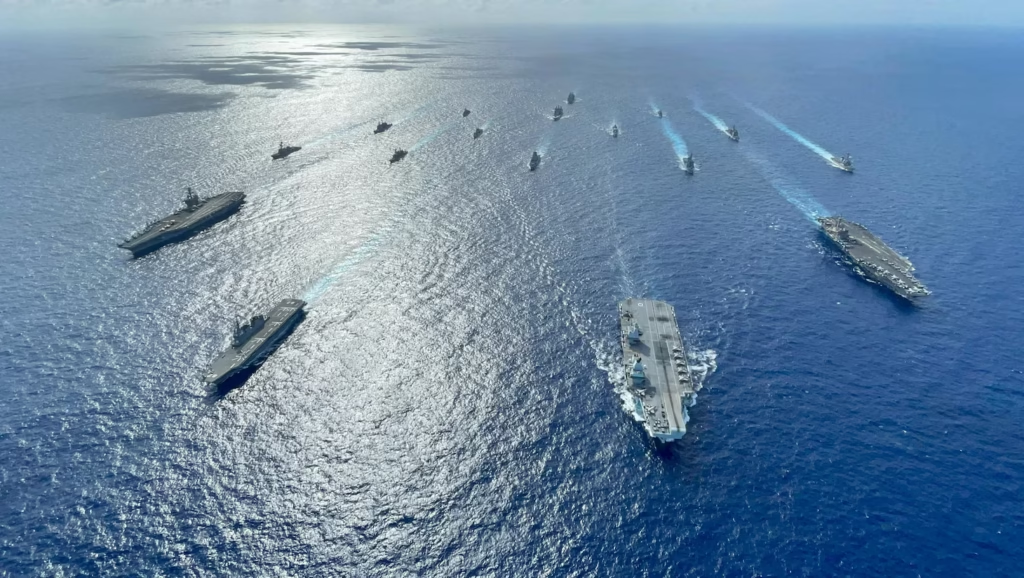
Here is our Analysis. The military buildup is doing two things at once. It strengthens Trump’s negotiating hand by making the cost of failure visible. It also narrows the window for diplomacy by creating conditions where a miscalculation, on either side, could trigger a response no one intended.
Who is responsible for managing that risk? Both governments. That question has not been answered to any verifiable standard by either side this week.
As much the US like to downplay Iran’s strength, we must also beware that Iran is not treating this as a bluff.
Iran has spent recent months repairing key missile facilities and heavily fortifying its nuclear sites, using concrete and large amounts of soil to bury key locations. Satellite imagery reviewed by CNN and the Institute for Science and International Security confirms this activity is accelerating.
Araghchi called the US military presence “unnecessary and unhelpful.” He said Iran is “prepared for peace” and that a diplomatic solution is within reach. He also said, pointedly, that Iran’s nuclear programme has no military solution.
More Buzz
Araghchi contradicted one prominent element of the US public position. He told a US television network that “the US side has not asked for zero enrichment,” which appears to conflict with what Trump and senior administration officials have said publicly. Neither side has clarified this discrepancy on the record.
Supreme Leader Ali Khamenei said any US attempts to remove his government would fail. He added: the strongest army in the world “can sometimes be slapped so hard it cannot get up.” Those comments were published by Iranian state media on Tuesday.
Revolutionary Guard General Salami warned that the IRGC would “open hell gates on invaders.” That language was not softened or walked back by Iranian officials in the 48 hours that followed.
Who is accountable here? Khamenei has the final word on Iranian policy. He has previously approved negotiations after advisors warned that the risk of war and economic collapse could destabilise his government. Whether that calculation still holds is unconfirmed.
In December 2024, the UN nuclear watchdog IAEA reported uranium enrichment to levels approaching weapons-grade and found an unprecedented stockpile of highly enriched uranium without a credible civilian purpose. That is up from over a year under the terms of the 2015 deal.
The USS Abraham Lincoln carrier strike group deployed to the region on 26 January 2026, accompanied by additional air, naval, and missile defense forces. The Gerald R. Ford has now followed it toward the Gulf.
Iran’s security forces have killed more than 6,400 protesters during the crackdown on nationwide unrest, according to the US-based Human Rights Activists News Agency. Some reports put the figure higher. This context matters because the protests weakened the Iranian government’s domestic position, which is shaping its urgency at the negotiating table.
The talks are now in their second round. Iran has been asked to submit a written proposal within two weeks. No third round has been confirmed or scheduled.
Iran has agreed to prepare a written proposal outlining its position on the outstanding gaps. The Iranian delegation “said they would come back in the next two weeks with detailed proposals to address some of the open gaps in our positions,” according to a US official briefed on the Geneva talks.
Iran has seemingly offered to cap its enrichment at low levels and dilute some of its highly enriched uranium, which would presumably include acceptance of IAEA inspections to verify compliance. The US has not confirmed whether this offer is sufficient.
Aso Read: MarkHack 5.0 Conference 2026: AI, Culture, and the Future of African Marketing
Retired US Air Force Brigadier General John Teichert said the diplomatic window is closing and that Iran “would be wise to make a deal. Otherwise, they’re going to face the full force of the United States military.” He does not believe Trump has made a final decision yet. His view is not US government policy, but it reflects a strand of thinking within military circles that is influencing how this situation is being framed in Washington.
Russia has called on Iran and all parties in the Middle East to exercise restraint. Kremlin spokesman Dmitry Peskov said the world is “seeing an unprecedented escalation of tensions” in the Middle East. Russia has offered to store and process Iran’s enriched uranium as part of a possible settlement, though that offer has not been formally accepted.
Saudi Arabia’s position has added a complicating layer. Saudi defense minister Khalid bin Salman said Trump “should take military action” against Iran, even as the kingdom’s official policy calls for a diplomatic resolution.
Several claims at the centre of this story remain unverified or contested. Africentra is flagging them clearly.
The status of Iran’s nuclear programme is not fully confirmed by international monitors. The IAEA has reported enrichment activity and an unexplained uranium stockpile. The exact current state of Iran’s weapons-relevant capacity is not publicly known.
It is not confirmed whether Trump has made a decision to strike Iran. CNN reported that the military has been briefed it could be ready within days. That is a readiness briefing. It is not a strike order.
Most analysts doubt that Iran has developed the weaponization knowledge necessary to build a nuclear bomb, with estimates ranging from several months to about two years. No public intelligence assessment has confirmed or denied this with precision.
Whether Iran’s written proposal, due within two weeks, will contain concessions that close the gap with US demands is unknown. The content of that document will determine whether a third round of talks happens at all.
Araghchi’s claim that the US has not demanded zero enrichment has not been addressed on the record by the White House or the Witkoff team. That contradiction is unresolved.
The significance is this, two nuclear-armed trajectories are converging, diplomacy has produced principles but no commitments, and the US military is in position to act if talks collapse.