





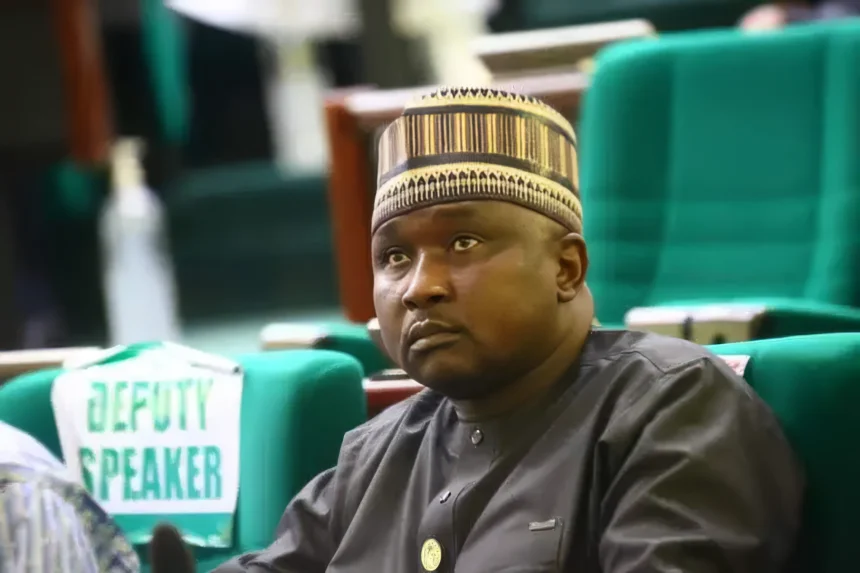
A member of Nigeria’s House of Representatives has called for the National Assembly to suspend legislative business until the Tinubu administration takes decisive action on the country’s worsening security crisis. Alhassan Ado Doguwa, who represents Doguwa and Tudun Wada Federal Constituency of Kano State, made the demand during a special security session of the House on Tuesday.
Africentra has confirmed that Doguwa, a senior lawmaker from the ruling All Progressives Congress, urged Speaker Tajudeen Abbas to “shut down” the legislature. His words: “Who are you legislating for? What law are you making when the country is running in blood?”
The call came during a special session convened specifically to address national security. Doguwa, a former Majority Leader of the House, described Nigeria’s security environment as “devastating” and “horrific.”
“The country is running in blood and tears,” he told colleagues. He warned that the crisis transcends religion, ethnicity, and party affiliation. He called it “a calculated attempt to demoralise the Nigerian state.”
Aso Read: El-Rufai Denies N423bn Allegation, Accuses Ribadu of Ordering Unlawful Arrest
Doguwa’s proposal was specific. He suggested declaring a “legislative emergency” that would halt routine parliamentary business. The goal: to force urgent executive action on insecurity.
He cited tangible impacts. Farmers cannot access their fields. Traders cannot attend markets. Worshippers fear for their lives in churches and mosques. He referenced a recent visit to Kebbi State with the Speaker, where he saw the governor “weeping in the heart.”
What did this person do? Doguwa used his platform as a senior legislator to demand accountability from his own party’s government. Who does it affect? Every Nigerian citizen, particularly those in northern states where banditry and kidnappings have emptied villages. Who is responsible? Doguwa placed responsibility squarely on the federal government, stating that security agencies are “doing their best” but their best “is not good enough.”
This is not a resolution. It is one lawmaker’s urgent call to action. But it signals a significant crack in the ruling party’s legislative front.
You need to understand what a legislative shutdown would mean. The National Assembly would cease passing laws. Budget approvals would stall. Executive oversight would pause. In Doguwa’s view, this suspension of normal order is justified because normal order has already failed ordinary Nigerians.
“The responsibility of government is the protection of lives and property,” he said. “That responsibility is being reneged upon.”
Africentra analysis: Doguwa’s language is notable for its bluntness. He is not calling for more committee hearings. He is calling for a work stoppage until tangible security improvements occur. This raises the political stakes for President Bola Tinubu, who campaigned on improving security.
Deputy Speaker Benjamin Kalu rejected the shutdown call immediately. His response was direct: “We are the hope of Nigeria. No problem is too big for this House to handle. We will not shut down. We will stay here together and find solutions.”
Speaker Abbas Tajudeen clarified the procedural reality. He stated that Doguwa’s remarks reflected personal views, not House resolutions. “Anything being mentioned here is just a mere opinion and not a decision of the House,” he said. Official motions require due process and votes.
What is the other side saying? House leadership argues that closing parliament abandons the legislative role in crisis response. They maintain that lawmakers must remain in session to provide solutions, not suspend work in protest.
The security statistics support Doguwa’s urgency, even if his method is disputed.
Nigeria has faced escalating violence across multiple fronts. Banditry in the northwest has displaced hundreds of thousands. Kidnapping for ransom has become routine in many states. Communal conflicts in the Middle Belt continue to claim lives.
The exact death toll from insecurity in 2024 and early 2025 remains disputed among monitoring organizations. What is confirmed: the frequency of mass abductions has increased, and the geographic spread of violence has widened beyond traditional conflict zones.
The House of Representatives has 360 members. Doguwa is one voice. But as a former Majority Leader, he carries weight within the APC caucus that controls the chamber.
The immediate procedural path is clear. For the National Assembly to actually shut down, a formal motion would need to be proposed, debated, and passed by majority vote. Speaker Abbas has signaled this will not happen without due process.
The political path is less certain. Doguwa’s public break with the administration’s security record creates pressure on Tinubu to demonstrate visible action. It also emboldens other lawmakers who may share his concerns but have remained silent.
Doguwa proposed specific next steps beyond shutdown. He called for reorganizing and supporting civil vigilante groups to strengthen grassroots security. He urged direct engagement with local communities affected by violence.
What questions remain unanswered? Whether the executive branch will respond with new security initiatives. Whether other APC lawmakers will echo Doguwa’s criticism. Whether the opposition will seize this internal ruling party rift.
Africentra has not confirmed whether President Tinubu or his security chiefs have been briefed on Doguwa’s remarks. We have not verified reports of specific new security operations being planned in response to this legislative pressure.
The exact number of lawmakers who privately support Doguwa’s position remains unknown. The Speaker’s office has not indicated whether additional security sessions will be convened.
What could still change? The House could formalize Doguwa’s call into an official motion. The presidency could announce emergency security measures. The crisis could deepen if violence escalates further ahead of the 2027 elections, which Doguwa warned could be destabilized.