Nigerian workers want a pay rise, not a transport allowance. The Federal Government now has two weeks to respond.
The Secretary to the Government of the Federation, George Akume, has set up a committee to review the demands of the Trade Union Congress (TUC), after the union rejected the government’s temporary ₦70,000 transport allowance for workers and insisted on a salary increase instead.
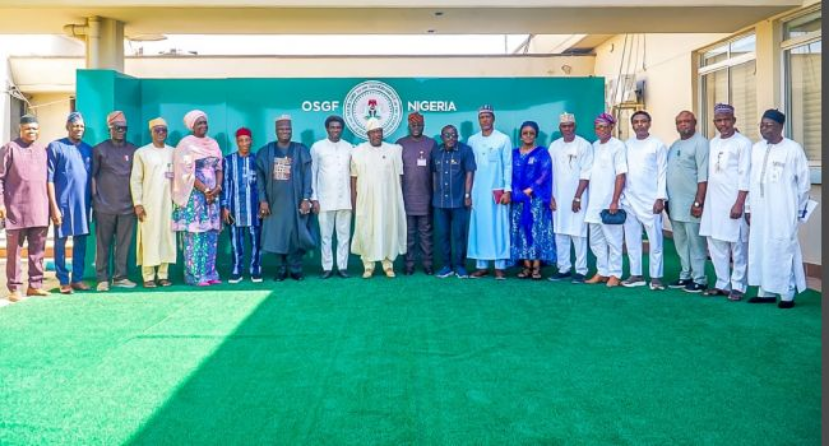
The decision came out of a meeting in Abuja on Tuesday, November 17, between Akume and a TUC delegation led by its President, Festus Osifo. TUC Secretary-General Nuhu Toro announced the outcome in a statement.
The committee will check what the government has already done on workers’ concerns, identify what is still outstanding, and make recommendations. It starts work immediately and must report to Akume within two weeks.
It includes three TUC representatives led by Toro, alongside officials from the Office of the SGF, the Office of the Head of the Civil Service of the Federation, the National Salaries, Incomes and Wages Commission and the Federal Ministry of Labour and Employment.
The transport allowance, payable over six months, was meant to cushion workers against rising living costs. The TUC says it falls short, arguing that only a direct pay increase can protect workers’ incomes.
The offer split organised labour. The Nigeria Labour Congress (NLC), led by Joe Ajaero, accepted the allowance. The TUC did not. The two leaders clashed publicly on Channels Television’s The Morning Brief in late October over who had the authority to negotiate with the government. “You cannot negotiate for a body that is represented, for a body that has a trade union,” Osifo said, rejecting the NLC’s acceptance on the TUC’s behalf.
On Wednesday, the two centres called a truce. At a joint press conference in Abuja, after mediation by former labour leaders, Ajaero and Osifo said they had set their differences aside. “The unity of the Nigerian working class is far greater than any disagreement between leaderships,” they said.
That unity matters for what comes next. Nigeria’s minimum wage is ₦70,000 a month under the National Minimum Wage Act signed by President Bola Tinubu in July 2024, which raised it from ₦30,000. The law requires a review every three years, putting the next round of negotiations due by mid-2027.
For millions of workers, ₦70,000 no longer goes as far as it did in 2024. The committee’s report in two weeks will show whether the government is ready to talk about wages now, or wants labour to wait.