
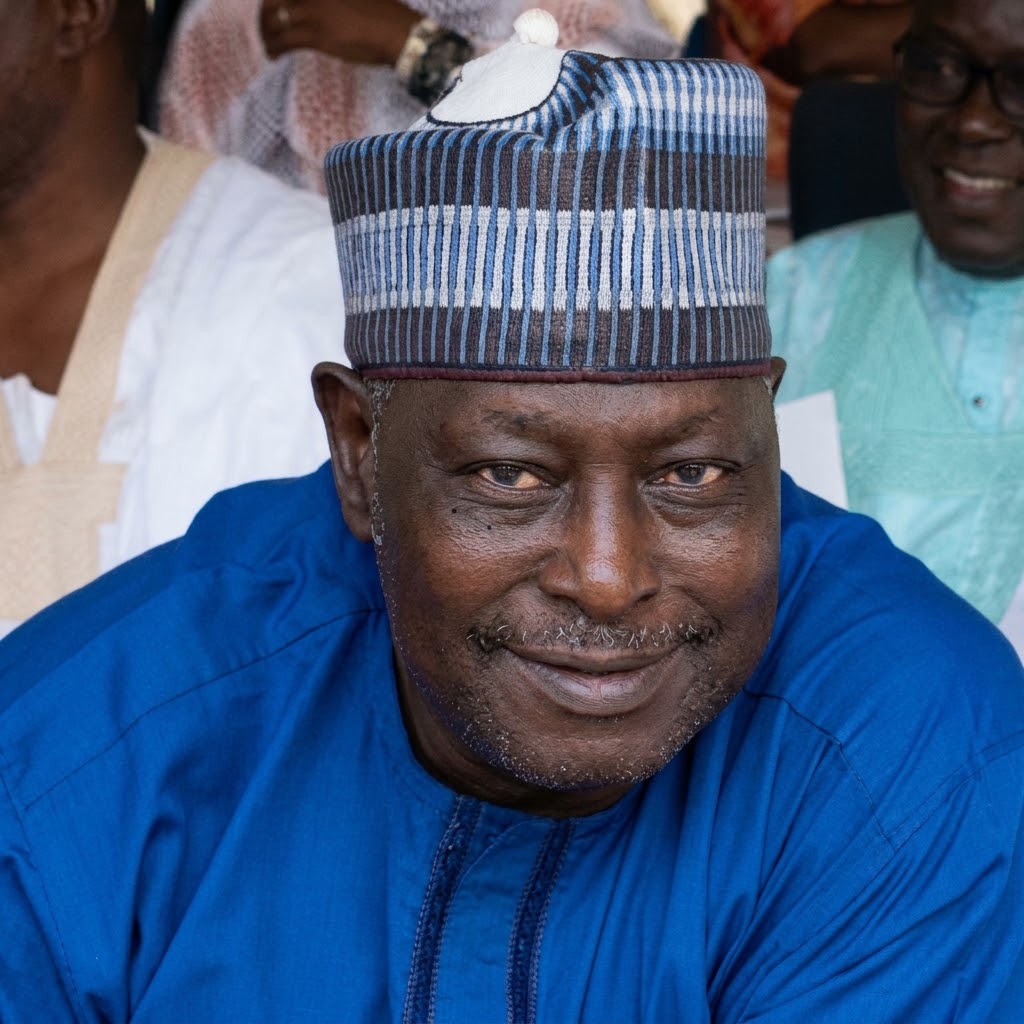
Former Secretary to the Government of the Federation, Babachir David Lawal, has warned that President Bola Tinubu could secure victory in the 2027 presidential election through what he described as a predetermined political process, alleging that defections to the ruling All Progressives Congress (APC) have weakened the opposition’s ability to compete.
Lawal made the remarks during an interview on Naija Unfiltered, a programme on Symfoni TV, where he discussed the forthcoming election, opposition politics, campaign financing and the possibility of Tinubu attempting to remain in office beyond the constitutionally permitted two terms.
The former Buhari administration official argued that the political realignments ahead of the election had created an environment in which opposition parties could struggle to mobilise sufficient resources and challenge the ruling party effectively.
According to Lawal, the outcome of the 2027 election may already have been determined in the minds of political actors, with the remaining process merely playing out publicly.
“The result for the 2023 election is already written. 2027 election is already written,” he said during the interview.
His remarks reflect his personal assessment of Nigeria’s political climate. He did not present independently verified evidence establishing that the 2027 presidential election result had been decided in advance.
Lawal Alleges Political Defections Have Weakened Opposition
Lawal identified the movement of governors and other influential politicians towards the APC as a central factor in his concerns about the credibility of the next election.
He alleged that the ruling party’s growing political influence had restricted opposition parties’ access to financial resources and weakened their ability to organise effective campaigns across the country.
He further argued that governors aligned with Tinubu would face political incentives to help deliver their states to the president, potentially prioritising the interests of their political allies over electoral competition.
Lawal claimed that such an environment could encourage electoral malpractice, alleging that political actors might seek to manipulate results rather than rely exclusively on voters’ choices.
He referenced the 2023 election and comments attributed to former Kaduna State governor Nasir El-Rufai concerning political strategies used to secure electoral victories.
However, Lawal’s allegations about plans to manipulate the 2027 results have not been independently established. They should not be interpreted as proof that the Independent National Electoral Commission (INEC), state governors or other electoral officials have agreed to predetermine the outcome.
The concerns come amid major political realignments ahead of the next presidential election. President Tinubu has secured support from numerous state governors, while opposition figures have struggled to maintain a united front.
Reuters reported in May 2026 that the opposition alliance seeking to challenge Tinubu had weakened following the departures of Peter Obi and Rabiu Kwankwaso from an African Democratic Congress-led arrangement. The report highlighted internal divisions and the risk of opposition votes being split among competing candidates.
Former SGF Predicts Public Resignation After Election
Lawal also expressed pessimism about the possibility of a sustained public response if the 2027 election is widely perceived as unfair.
He suggested that Nigerians might avoid large-scale confrontation, while candidates and political parties would turn to the courts to challenge disputed results.
In his assessment, public protests could emerge after the election but eventually lose momentum, leaving the country to continue under the elected administration.
His comments drew attention to a central question ahead of the vote: whether political parties, electoral institutions and citizens will have sufficient confidence in the process and its outcome.
The January 16, 2027 presidential and National Assembly elections are scheduled by INEC, which is responsible for organising and overseeing the polls.
The credibility of the election will depend on the conduct of the electoral process, the transparency of result collation, compliance with electoral law and the ability of relevant institutions to address credible complaints.
Lawal Raises Possibility of Tinubu Seeking a Third Term
During the interview, Lawal was also asked whether Tinubu might attempt to remain in office beyond the constitutionally permitted two terms.
Responding, he said such an attempt would depend on the president’s circumstances and on whether Nigeria’s political institutions could prevent it.
“If God gives him the long life to do it, he will,” Lawal said, adding that the president could pursue such a course if the National Assembly and other institutions failed to stop him.
The comments amount to speculation about a possible future political scenario. Lawal did not provide evidence that Tinubu has announced or is pursuing a third-term agenda.
Nigeria’s Constitution limits a person from being elected president more than twice. Any attempt to extend presidential tenure beyond the constitutional framework would raise fundamental legal and democratic questions.
Tinubu’s current re-election campaign is for a second term, not a third. He launched his campaign in Kaduna on October 24, 2026, ahead of the January 2027 presidential election.
Opposition Unity and Electoral Credibility Remain Key Questions
Lawal’s intervention comes at a critical stage in Nigeria’s preparations for the 2027 election, with the APC benefiting from a broad network of political allies and opposition parties facing disputes over leadership, candidate selection and coalition-building.
The former SGF’s allegations add to the debate about whether Nigeria’s political environment will allow a genuinely competitive election. However, allegations of predetermined results and planned manipulation require evidence and should be distinguished from documented political defections and disagreements among opposition leaders.
Ultimately, the 2027 election will test the strength of Nigeria’s electoral institutions, the ability of opposition parties to organise credible challenges and the willingness of political actors to accept lawful electoral outcomes.
Lawal’s warning raises serious questions about public confidence in the process. Whether those fears are borne out will depend on events and evidence as the election approaches.