




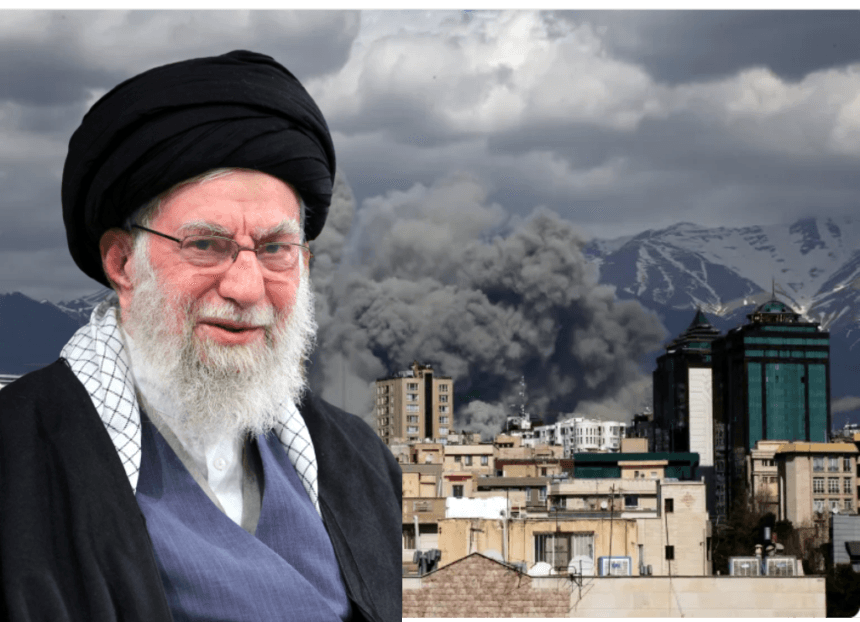
Iranian state media confirmed the death of Supreme Leader Ayatollah Ali Khamenei following a joint U.S.-Israeli airstrike on Saturday, February 28, 2026. The strike targeted a compound in Tehran, reportedly killing the leader along with several family members and high-ranking military officials.
State outlets including IRNA and Fars News report that Khamenei died at his residence alongside his daughter, son-in-law, and grandchild. The Islamic Republic of Iran Broadcasting (IRIB) declared 40 days of national mourning following the announcement.
Aso Read: Ted Cruz Nigeria Bill: What S.2747 Means for Nigerian Officials
Sources tell Africentra that the strike also killed Revolutionary Guard commander Mohammad Pakpour and Defense Minister Aziz Nasirzadeh. National defense council secretary Ali Shamkhani is also listed among the casualties.
More Buzz

Iran responded immediately by launching missile and drone attacks against U.S. military bases in the Middle East. These strikes targeted the U.S. Navy’s Fifth Fleet in Bahrain and locations in Tel Aviv.
Satellite imagery confirms significant structural damage to the Supreme Leader’s compound and the surrounding urban district. Connectivity data shows Iran’s national internet access has plummeted to 1% of its usual levels. This near-total blackout limits the flow of information from inside the country to the outside world.
This event triggers an immediate shift in global security that affects your daily costs and safety. A conflict of this scale typically leads to a rapid increase in global oil prices. You will likely see this reflected at the fuel pump and in the cost of transported goods within days.
For those with family or business interests in the Middle East, the internet blackout means communication is currently impossible. The regional instability may also lead to changes in international travel security and visa processing.
The removal of Iran’s central authority figure creates a power vacuum. This uncertainty often leads to volatile markets and heightened military readiness worldwide. You should prepare for increased screening at international borders and potential fluctuations in your investment portfolios.
The U.S. Department of Defense has not yet issued a formal statement regarding the specific casualties of the strike. Officials acknowledged “targeted operations” against high-value military infrastructure in Tehran.
“The operation sought to neutralize immediate threats to regional stability,” a Pentagon spokesperson stated. This means the U.S. and Israel acted to stop planned attacks they believed were imminent.
In Tehran, acting officials are framing the deaths as a “martyrdom.” They are using the state-controlled media monopoly to call for national unity and a “crushing revenge” against the West.
The United Nations has called for an emergency session of the Security Council. They are urging all parties to exercise maximum restraint to prevent a full-scale regional war.
The scale of the military engagement is reflected in the following data points:
The current level of Iran’s connectivity to the global internet is now at 1% while a fourty days of national mourning has been declared by the Iranian government. We have also gathered that the total number of senior Iranian officials confirmed dead by state media is at the time of this publication is five. While the number of major U.S. and Israeli naval or city hubs confirmed as targets of Iranian retaliation..
Polls conducted prior to this event showed that 64% of regional analysts believed a direct strike on Tehran would lead to a broader conflict. Market data shows Brent Crude oil prices rose by 8% in the two hours following the initial reports.
The Iranian Assembly of Experts must now meet to choose a successor to the Supreme Leader. This process is usually private, but the current chaos may force a more visible transition.
Military analysts expect continued exchange of fire between Iranian proxies and U.S. forces in Iraq and Syria. You should watch for official statements from the White House regarding the deployment of additional carrier strike groups to the Persian Gulf.
The accountability question is central here: Who authorized a strike that included the family members of a head of state? The U.S. and Israeli governments must explain the legal basis for this specific targeting. How will they manage the fallout of a leaderless, nuclear-capable nation?
Africentra has not yet obtained independent confirmation of Ayatollah Khamenei’s death. While state media reports it, international intelligence agencies have remained silent on the finality of the claim.
Conflicting reports have emerged from some Iranian outlets. While they confirm the deaths of family members, a few smaller state-linked sites have not updated their headers to reflect the leader’s passing.
The exact number of civilian casualties in the surrounding Tehran neighborhood remains unknown. The internet blackout makes it difficult for independent journalists to verify the extent of the “collateral damage” cited in early reports.
This marks the first time since the 1979 revolution that the top of Iran’s leadership hierarchy has been violently disrupted.