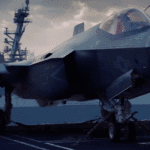






The opening salvos came hard and fast. U.S. and Israeli aircraft struck targets across Iran in what officials in Washington and Tel Aviv described as precision operations against the country’s air defences and nuclear infrastructure. The strikes were real. The damage was real. And yet, weeks later, the Islamic Republic has not collapsed, its leadership has not fled, and its nuclear ambitions remain visibly intact.
Israeli and American forces have, by credible military assessments, significantly degraded Iran’s surface-to-air missile networks and set back uranium enrichment at several known facilities. Israeli Air Force commanders have said publicly that Iran’s ability to threaten Israeli airspace is now curtailed. These are not trivial achievements.
But Iran’s nuclear programme was never housed in a single building. Decades of pressure from the West taught the Islamic Republic exactly one lesson: bury what matters, disperse what you can’t bury, and never let your enemy know how much you’ve hidden. Several enrichment sites including facilities whose depth and hardening remain contested are reported to have survived the initial wave of strikes.
Iran began constructing hardened underground nuclear facilities most notably at Fordow, dug into a mountain near Qom after the U.S. invasion of Iraq in 2003 made clear that no regime without a deterrent was safe from American military power. Whether the most advanced U.S. bunker-busting munitions can fully destroy Fordow has been debated by arms analysts for years. No official confirmation of its destruction has been issued.
Aso Read: Ayatollah Khamenei Reported Dead in Joint U.S.-Israeli Strike
Here is where the coalition begins to fracture at the seams. Israeli Prime Minister Benjamin Netanyahu and a significant portion of his war cabinet have said, in terms that are increasingly explicit, that the goal is not a deal it is the end of the Islamic Republic as a governing power. Israel’s military history gives it reasons to distrust any agreement that leaves the regime intact and resentful.

But the political calculus in Washington is different. President Donald Trump ran, at least rhetorically, on ending foreign entanglements. His advisers are now telling him according to three U.S. officials familiar with internal deliberations, as reported by multiple outlets that a protracted ground campaign or sustained bombing campaign is not producing the rapid capitulation that was anticipated. The Iranian government has not fractured. The Revolutionary Guard Corps has not stood down. And the Iranian street, which has genuine grievances against the clerical regime, has not risen up in the way some planners hoped.
There’s a telling divergence emerging between Israeli military commanders and Israel’s political leadership. The generals, who have studied Iranian resilience closely, are reportedly more cautious about expectations than the politicians currently driving the war’s stated objectives.
Iran’s civilian population is bearing the weight of decisions made by its government, by Israel’s government, and by the United States. That is a fact, not a political statement. The conditions generating civilian suffering power disruptions, fuel shortages, restricted medical supply chains are the direct result of the strike campaign being conducted by U.S. and Israeli forces. Naming that is not partisanship. It’s accuracy.
Iranian state media has reported civilian casualties in the hundreds. Independent human rights monitors, including UN OCHA field reports, describe significant displacement in areas near struck facilities. The exact toll is not verifiable from outside the country. What can be said with confidence is that the figure is not zero, and that it is rising.
Trump has told allies, according to senior diplomatic sources cited by Reuters and The Wall Street Journal, that he wants this resolved quickly. The problem is that “quickly” now appears to require either a level of escalation including potential ground action, or strikes on leadership targets that carries profound risk of regional blowback, or a negotiated compromise that gives Iran something in return for halting enrichment.
Iran has not asked for terms. It has, through back-channel intermediaries in Oman and Qatar, indicated it remains willing to talk but not from a position of total defeat. That distinction matters. A regime that negotiates under duress and survives will not honour those terms indefinitely. A regime that is seen by its own population to have withstood American and Israeli air power may, paradoxically, emerge from this with more domestic legitimacy than it entered it with.
Israel says the strikes have set Iran’s nuclear programme back by years and eliminated key figures in the Revolutionary Guard’s command structure. Independent analysts at the Arms Control Association assess the setback as significant but not fatal to Iran’s nuclear capability particularly if intact enrichment capacity remains underground. Where the two assessments diverge, the physical evidence on the ground is not accessible to independent verification.
Iran says it has suffered losses but that its nuclear programme remains sovereign and operational. It has shown state media footage of undamaged centrifuges. Independent experts cannot confirm these images are current or representative. They should be treated as unverified.
The air war has demonstrated U.S. and Israeli military dominance in the skies over Tehran. It has not demonstrated that dominance translates into the political outcome either government wants. Those are two different things. The gap between them is where the next phase of this crisis will be decided.
No credible military analyst in Washington, London, or Tel Aviv is currently predicting a rapid Iranian surrender. The question has shifted from whether Iran can be coerced to how much coercion Trump is willing to sustain before a compromise becomes the least-bad option. If he moves toward a deal, he will face fury from Israel and from the hawkish wing of his own coalition. If he escalates, he risks a wider regional war that draws in Hezbollah, potentially destabilises Iraq, and stretches American military logistics in ways the Pentagon has privately flagged as concerning.