

Summary
I want you to sit with this for a moment.
Key Takeaways
- Seven years inside the machine of the Lagos State government, under the two most powerful governors the state has seen in the democratic era.
- The wealth of Lagos monarchs is not a secret.
- The Oba of Lagos is the most institutionally powerful monarch in this city.
- The commercial nerve centre of the most economically significant city in West Africa sits inside Iru land.
- I need you to pay attention here, because this is the one most people dismiss, and dismissing him is a mistake.
I want you to sit with this for a moment.
In October 2020, a mob broke into Iga Idunganran, the ancient palace of the Oba of Lagos on Lagos Island. They vandalised the building, carted away his staff of office, and looted whatever they could carry. Months later, Oba Rilwan Akiolu stood at the commissioning of the remodelled Glover Memorial Hall and calmly told the world exactly what they had taken from him.
“I can now say publicly: they stole $2 million and N17 million from my palace.”
The room went quiet. Then the internet exploded.
And here is the
And here is the question that every Nigerian asked in the hours that followed. A retired assistant inspector-general of police, collecting a government stipend as a ceremonial king, kept $2 million in physical cash in his palace. Where did that money come from?
That is the question I am going to answer in this piece. Not just for Oba Akiolu, but for the monarchs who sit on the most powerful thrones in Lagos. I have done the research. I have read the property records, the published profiles, the court filings, and the market listings. What I found will tell you more about how power and money work in this city than anything you will read on any society page.
Let us get into it.
Before We Start, You Need to Understand One Thing.
The wealth of Lagos monarchs is not a secret. It is not new. It is a structural feature of how traditional institutions operate in Nigeria’s most commercially dense state.
These kings are not paid executives. They are not politicians drawing ministerial budgets. Their formal stipends from the Lagos State Government are, by every account I have read, largely symbolic. What they have, they built or inherited. Through land, through political access, through business, and through what I will call the invisible economy of royal influence.
That economy is large. In Lagos, where a single plot of land in certain locations now crosses N1 billion, and where access to the right phone call can determine whether your development gets approved or buried, being a monarch is one of the most financially consequential positions in the entire country.
Keep that in mind as I take you through each of these men, one by one.
OBA RILWAN BABATUNDE AKIOLU – The Oba of Lagos
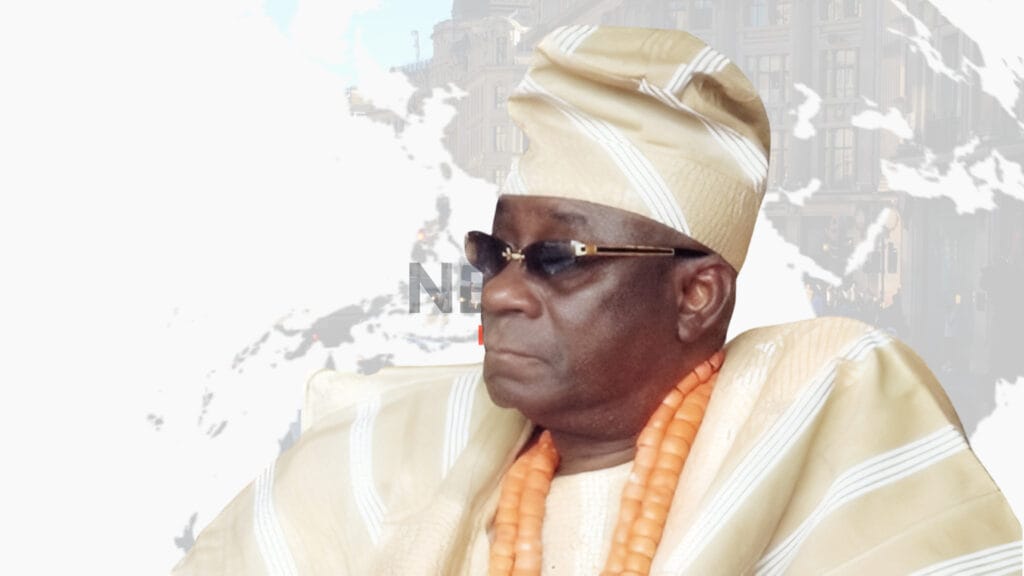
Estimated net worth: $40 millionSource basis: Multiple published assessments including Pulse Ghana and Nigerian Finder, verified against known assets.
Let me start with the man himself.
Oba Babatunde Aremu Akiolu was the 21st Oba of Lagos, crowned on May 23, 2003. Before that day, he had spent over three decades in the Nigeria Police Force, retiring as Assistant Inspector-General in 2002. You need to hold that fact in your head, because it is central to every question about where his wealth came from.
He did not arrive at that throne as a businessman. He did not arrive as an oil magnate or a property developer. He arrived as a retired senior police officer with a career salary and a government pension. His financial profile before 2003 was consistent with decades of public service, not private accumulation.
So what changed?
The throne changed everything. And I do not mean that in a metaphorical sense. I mean it literally.
The Oba of Lagos is the Permanent Chairman of the Lagos State Council of Obas and Chiefs. Not elected. Not rotated. Permanent. He holds land interests across Lagos Island, Isale Eko, and surrounding communities. He draws income from government allowances, real estate holdings, and business interests. But more than any of that, he holds the most valuable commodity that Lagos has to offer. He holds access.
Here is what I mean by that. When a developer wants to build in any area historically connected to the Lagos throne, a courtesy visit to Iga Idunganran is not optional. It is not etiquette. It is infrastructure. The endorsement of the Oba of Lagos opens doors that no amount of money alone can open. Politicians need his blessing before major electoral campaigns. Businessmen need his validation before major projects. Celebrities need his favour to move in certain circles.
That access has a financial value that no published net worth estimate has ever properly captured.
After his coronation, he built a palace estimated to be worth N2 billion. That palace became a commercial address in itself. The Eyo festival, hosted from Iga Idunganran, is one of Lagos’ most commercially significant cultural events. It draws tourism income, corporate sponsorship, and government co-investment directly into the palace’s orbit.
Now let me bring you back to the $2 million.
Oba Akiolu disclosed publicly in March 2021 that $2 million and N17 million were stolen from his palace during the EndSARS violence of October 2020. The Centre for Anti-Corruption and Open Leadership called on the EFCC to investigate. They asked, plainly, how a ceremonial monarch came to keep that amount of cash at home, and why that money was sitting in a palace while many of his subjects lived in poverty.No investigation came. No EFCC probe was opened. The question remains, to this day, publicly unanswered.
I am not here to accuse anyone of wrongdoing. What I am here to tell you is this. The Oba of Lagos is the most institutionally powerful monarch in this city. Every powerful person in Lagos, politician, billionaire, entertainer, makes a point of visiting him. That access has always been worth money. And in Lagos, money follows access the way rain follows cloud.
OBA SAHEED ADEMOLA ELEGUSHI – Elegushi of Ikate-Elegushi Kingdom
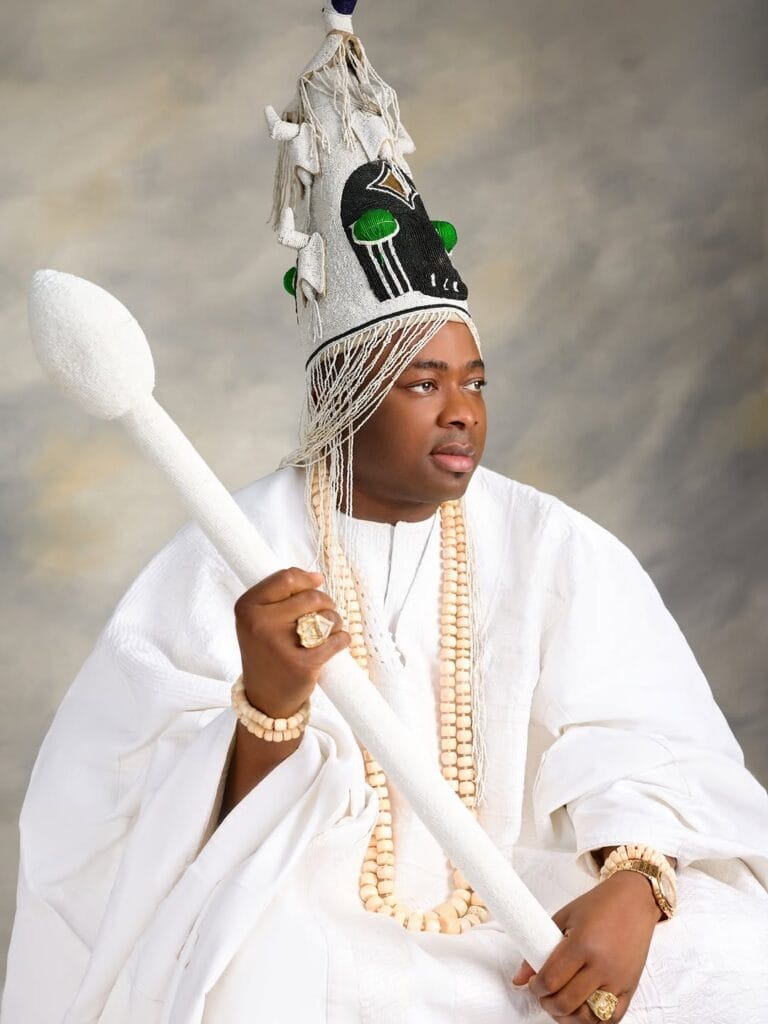
Estimated net worth: $20 million (conservative working estimate)Source basis: Multiple sources, significant divergence. I will explain exactly why.
Before I give you the numbers on this man, I want to deal with the information problem directly, because I think you deserve that honesty.
If you search for Oba Elegushi’s net worth online, you will find three completely different answers. One source puts it at $200,000 to $500,000. Another says $20 million. A third, circulated widely on entertainment platforms, claims $450 million. I need you to understand that all three of those numbers cannot be correct, and two of them almost certainly are not. The $450 million figure has no verifiable basis that I can find. The $20 million figure, built from his confirmed business interests in real estate, construction, and hospitality across the Lekki corridor, is the most credible working estimate available.
Please treat net worth figures for Nigerian monarchs the way you would treat directions from a stranger in Lagos. Useful as a general guide. Not to be followed blindly.Now, here is what the evidence actually shows.
Now, here is what the evidence actually shows.
Oba Saheed Ademola Elegushi, born April 10, 1976, is the 21st Elegushi of Ikate-Elegushi Kingdom in Eti-Osa Local Government Area. He was presented with his staff of office on April 27, 2010, succeeding his father Oba Yekini Adeniyi Elegushi. He studied economics at Lagos State University and later earned a master’s degree in public administration from the University of Manchester.
But here is the detail that matters most to understanding his wealth.
Before he became Oba, Elegushi served as Personal Assistant to former Lagos State Governor Asiwaju Bola Ahmed Tinubu from 2003 to 2007. He then served as Senior Special Assistant on Special Duties to Governor Babatunde Fashola from 2007 to 2010. He walked out of Fashola’s government and directly onto his throne.
Think about what that means. Seven years inside the machine of the Lagos State government, under the two most powerful governors the state has seen in the democratic era. He was not a junior clerk. He was a senior assistant, close to the centre of how land approvals, government contracts, and development decisions were made in this city.
The contacts he built in those seven years, and the knowledge of how the system works, went with him to Ikateland when he was crowned.
His kingdom sits on land in the Lekki-Eti-Osa corridor that is now among the most expensive real estate in Sub-Saharan Africa. The Elegushi Beach area, land that carries his family’s name, commands prices that run into hundreds of millions of naira per plot. He has invested heavily in real estate and construction across Lekki. His hospitality portfolio, including luxury hotels and event centres on that axis, is documented publicly. His vehicle collection includes a Rolls-Royce Phantom, a Maybach 600, and a 1967 Vintage Cadillac De Ville.
He has also partnered with the Ooni of Ife on the development of Lakeview Park 2 in Lafiaji, off Orchid Hotel Road in Lekki, one of the corridor’s premium residential developments. That kind of partnership does not happen without significant capital on the table.
Now let me share something with you that I found in the public comments on his activities.
When Elegushi visited a development project in Ikate in December 2025, a widely shared public comment read: “Can somebody read me Demola Elegushi’s resume that affords him the level of wealth he has been displaying since he became an Oba? He owns at least three hotels on that Lekki axis.”
That question has not been answered in any formal public setting.
What the evidence does answer is this. His kingdom controls land in one of the most valuable corridors in the country. His political formation was at the heart of the Lagos State government. His business portfolio reflects both. The wealth is real and visible. Its precise origins remain, like those of almost every Lagos monarch, completely unaudited.
OBA ABDULWASIU OMOGBOLAHAN LAWAL – The Oniru of Iru Land
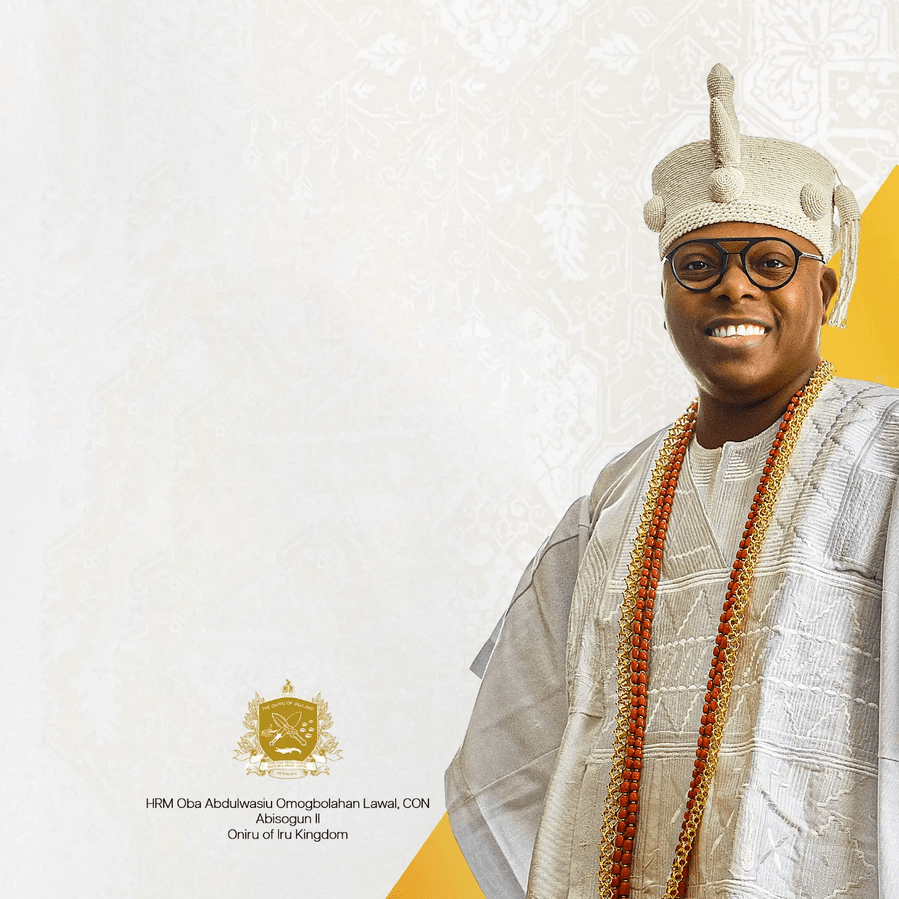
Estimated net worth: Not publicly declared. Assessed through kingdom land holdings.Source basis: Property market data, kingdom redevelopment plans, published court and media reports.
I want you to forget about net worth figures for this one, because they would be meaningless.
The wealth of the Oniru of Iru Land is not measured in dollars. It is measured in square metres. And when you see the numbers I am about to show you, you will understand why.
Oniru Estate in Victoria Island comprises over 3,000 housing units. The Oniru Chieftaincy Family holds the Certificate of Occupancy over that estate, issued in December 1991. Every property title in Oniru Estate derives from that document. Every landlord, every tenant, every developer building in that address traces their legal title back to one source: the Oniru family.
Now let me translate that into money for you.
A single plot of approximately 3,200 square metres in Oniru Estate is currently listed at between N950,000 and N1.5 million per square metre. That means one plot, just one, is worth between N3 billion and N4.8 billion at today’s prices. The estate has over 3,000 units. I am not going to do the full arithmetic for you, but I want you to sit with the scale of what that land base represents.
Iru Kingdom does not stop at Oniru Estate. It spans Victoria Island, Ikoyi, and the Lekki axis. The commercial nerve centre of the most economically significant city in West Africa sits inside Iru land.
The current Oniru, Oba Abdulwasiu Omogbolahan Lawal, Abisogun II, became the 15th Oniru on June 7, 2020, after the death of his predecessor. Before ascending the throne, he had served as Commissioner for Agriculture in Lagos State. His father was the Ojora of Lagos from 1977 to 1993. Multi-generational roots do not begin to describe it. This family has been inside the Lagos traditional institution machinery for decades.
But I also want to tell you something that happened almost immediately after his coronation, because it shows you exactly what is at stake on this throne.
Within weeks of Oba Lawal receiving his staff of office, residents of Oniru Private Estate wrote an open letter to Governor Sanwo-Olu, alleging that the new Oba had begun challenging their property titles without legal basis, and that nothing like this had occurred under his predecessors. His legal team confirmed they were handling the matter.
That dispute tells you everything you need to understand about the Oniru throne. This kingdom’s wealth and its property market control are inseparable. When a new Oba ascends, the land question comes with the crown. It is not a side issue. It is the central issue. And it is worth billions.
OBA KABIRU ADEWALE SHOTOBI — Ayangburen of Ikorodu
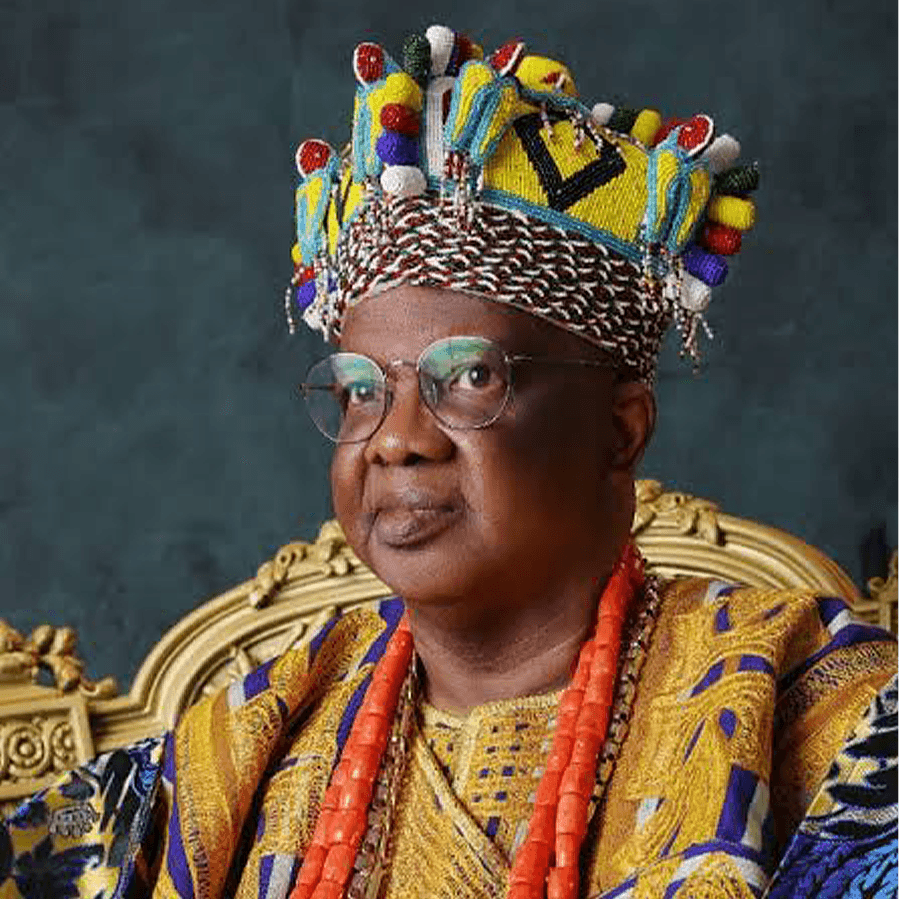
Estimated net worth: Not publicly available.Source basis: Constitutional position, land holdings, community influence.
I need you to pay attention here, because this is the one most people dismiss, and dismissing him is a mistake.
You will not see the Ayangburen of Ikorodu on Lagos society pages. You will not see photographs of his vehicles trending on Instagram. He is not the kind of monarch who shows up at Afrobeats concerts or gives television interviews about his lifestyle. He is a different kind of wealthy, and I would argue, a more durable kind.
HRM Oba Kabiru Adewale Shotobi, Adegorushe V, became the Ayangburen of Ikorodu in 2015, installed by then-Governor Babatunde Fashola. He is one of four Vice Chairmen of the Lagos State Council of Obas and Chiefs. That position is structural, not ceremonial.
Now here is what I want you to understand about Ikorodu, because I think many of you reading this have been miseducated about its value.
People describe Ikorodu as less glamorous than the Island. That description is, to put it plainly, financially illiterate. Ikorodu covers one of the largest land masses in Lagos State. Industrial land in Ikorodu is valued today at a fraction of what Island land costs, but it is appreciating fast. Manufacturing businesses, logistics companies, and light industrial operations are relocating there from congested Island locations at a rate that is accelerating. The land the Ayangburen’s domain covers is not what it was ten years ago, and it will not be what it is today in another ten years.
The Ayangburen’s wealth does not announce itself. It accumulates. In land excision decisions, in community access, in traditional dispute resolution across a mainland corridor that the rest of Lagos has not yet caught up with in valuing.
I will tell you this: invisible wealth in Lagos, wealth that does not depend on Instagram or owambe appearances, is often the most durable wealth of all.
I have taken you through four monarchs. I have shown you the land records, the business interests, the political formations, and the controversies. But I owe you one final, direct answer.
You are probably asking: where are the tax records? Where are the audited accounts? Where are the declarations?
They do not exist. And they are not required.
That is the truth. Nigerian traditional rulers are not constitutional public officeholders. They receive government stipends. Their private assets, land holdings, and business interests face zero disclosure requirements. The system grants them significant power over land, governance, and community life, and in return asks for no financial transparency whatsoever.
That is the gap where royal wealth and public suspicion have always met.
When Oba Akiolu told the world that $2 million was stolen from his palace, Nigerians called for an EFCC investigation. None came. When questions arise about how a royal land claim shapes a property market worth trillions, no body is required to answer them. When a monarch’s business portfolio grows alongside his political connections, there is no register to check.
want to leave you with this.
The wealth of Lagos’ monarchs is real. It is documented, in land registries, in property listings, in vehicle sightings, and in the quiet, shared understanding of every Lagos businessman who has ever needed a royal endorsement to move a project forward. What it is not is accountable, not to the public, not to anti-corruption agencies, and not to the communities whose land, history, and loyalty are the very source of what makes these thrones worth sitting on in the first place.
That is the final truth about the Wealth of Eko. It is enormous. It is protected by a legal framework that requires nothing of the people who hold it. And the people who fund it, through their land, their deference, and their community trust, are the last ones anyone in this system is required to answer to.Make of that what you will.